.jpg)
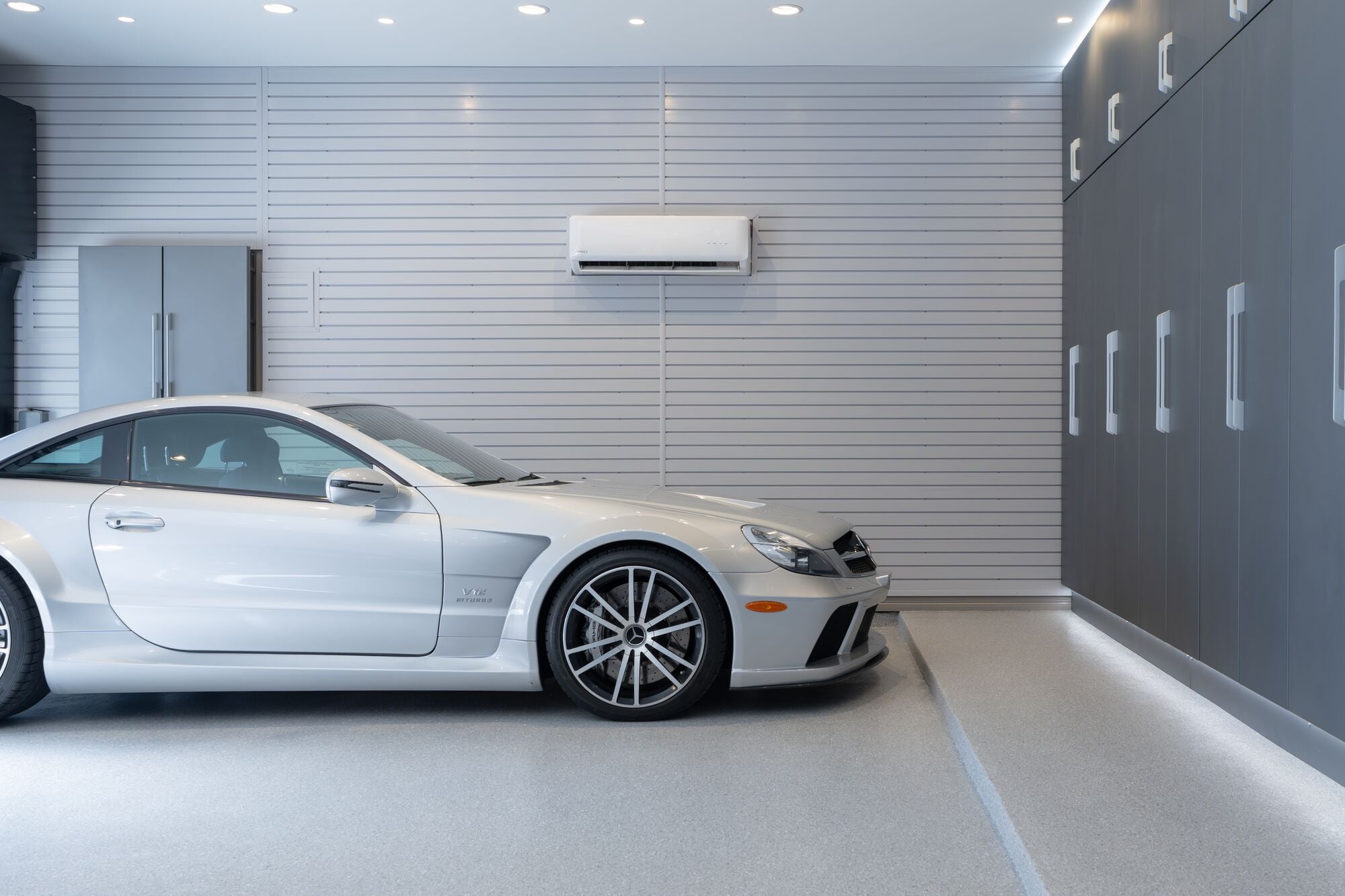
Picking a garage floor coating feels straightforward until the coating starts peeling, yellowing, or lifting under your tires six months later. Most failures trace back to questions that were never asked before the project started. Garage Living helps homeowners evaluate durable garage flooring by focusing on real performance conditions, not just surface appearance.
This article walks you through the key questions you should ask before committing to any garage floor system. Each one targets a specific performance factor, from moisture and parking loads to chemical exposure and long-term maintenance, so you can make a confident, informed decision.
Durable garage flooring
- Moisture testing before installation prevents the most common cause of coating delamination and early failure.
- Polyaspartic coatings cure faster and resist UV yellowing more effectively than standard epoxy systems.
- Hot tire pickup resistance is critical for any garage that regularly parks vehicles on coated floors.
- Garage Living designs complete flooring systems that account for parking loads, moisture, and daily wear.
- Surface preparation quality determines coating adhesion more than the coating product itself does.
Critical questions for choosing durable garage flooring
1. Has the concrete been tested for moisture?
Moisture vapor moving through concrete is the leading cause of garage floor coating failure. Before any product goes down, the slab needs a calcium chloride or relative humidity test to measure vapor transmission rates.
If moisture levels exceed the coating manufacturer's threshold, the coating will lose adhesion over time. Experienced installers commonly see bubbling and peeling on floors where this step was skipped. A vapor barrier or moisture mitigation primer can solve the issue when caught early.
2. What type of coating resists hot tire pickup?
Hot tire pickup happens when warm tires bond to the coating surface and pull material away as the vehicle moves. Epoxy coatings are particularly vulnerable to this because they soften under sustained heat from parked vehicles.
Polyaspartic coatings resist hot tire pickup because they maintain surface integrity at higher temperatures. If you park vehicles in your garage daily, ask your installer specifically about hot tire resistance ratings. This single factor often separates coatings that last from those that fail early.
3. How will the floor handle chemical and salt exposure?
Garages collect road salt, de-icing chemicals, motor oil, and brake fluid throughout the year. A coating that resists staining from coffee but breaks down under calcium chloride will not hold up in a working garage environment.
Ask about chemical resistance ratings for the specific compounds your floor will encounter. Winter climates increase salt exposure significantly. Coatings with high abrasion and chemical resistance, like polyaspartic systems, handle these conditions without degrading or discoloring over time.
4. What surface preparation does the installer use?
Surface prep determines whether a coating bonds to the concrete or sits loosely on top. Diamond grinding is the industry standard because it creates a profile the coating can grip mechanically, and it removes any previous sealers or contaminants.
Acid etching, while common in DIY kits, rarely produces enough surface profile for professional coatings. Ask your installer what equipment they use and whether they grind or etch. Coatings applied to properly ground concrete bond deep into the slab rather than relying on a topical surface bond.
5. How fast does the coating cure, and when can you drive on it?
Cure time affects how long your garage is out of service. Traditional epoxy systems typically need several days before they can handle vehicle traffic. That means rearranging parking, clearing the space, and working around extended downtime.
Polyaspartic coatings cure significantly faster, often allowing foot traffic in just a few hours and vehicle traffic the following day. If minimizing disruption matters to you, ask your installer for specific cure timelines and whether the coating system is rated for same-day or next-day vehicle use.
6. Does the coating include UV stability?
Garage floors near open doors receive direct sunlight for hours each day. Coatings without UV stabilizers will yellow, chalk, or fade, especially in southern and western-facing garages where sun exposure is constant.
Polyaspartic coatings include built-in UV resistance, which keeps the surface clear and consistent over time. Epoxy topcoats tend to amber noticeably after prolonged sun exposure. If your garage door stays open regularly, UV stability should be a non-negotiable requirement in your floor coating selection.
7. What warranty backs the installed floor system?
A warranty signals how much confidence the installer has in their materials and process. Ask what is covered: Does it include delamination, hot tire pickup, chemical staining, or only cosmetic defects?
Also ask whether the warranty is tied to the product or the installation. A product warranty alone will not help if the failure was caused by poor surface preparation. Garage Living backs Floortex projects with a limited warranty that covers both materials and workmanship, which means accountability does not fall through the cracks.
8. How does the floor perform under heavy parking loads?
Static loads from parked vehicles, especially heavier trucks and SUVs, press on the same contact points day after day. Coatings that are too rigid or too soft can crack or indent under that sustained pressure over months of daily use.
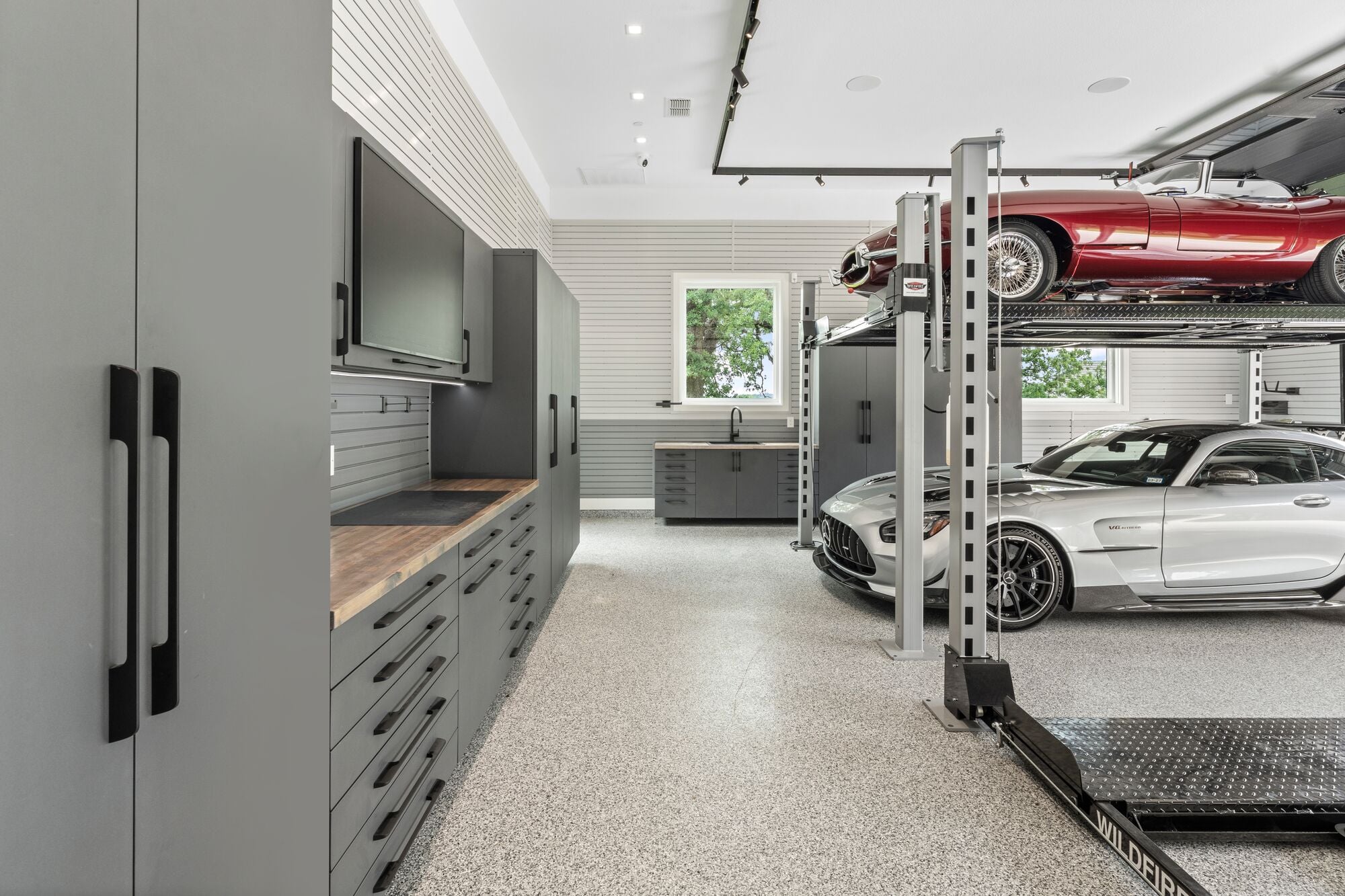
Ask about the coating's compressive strength and flexibility rating. A system designed for residential garage conditions should handle standard vehicle loads without surface distortion. This is especially important if you plan to add a car lift, which concentrates weight onto four fixed contact points.
9. Will the coating system work with your full garage design?
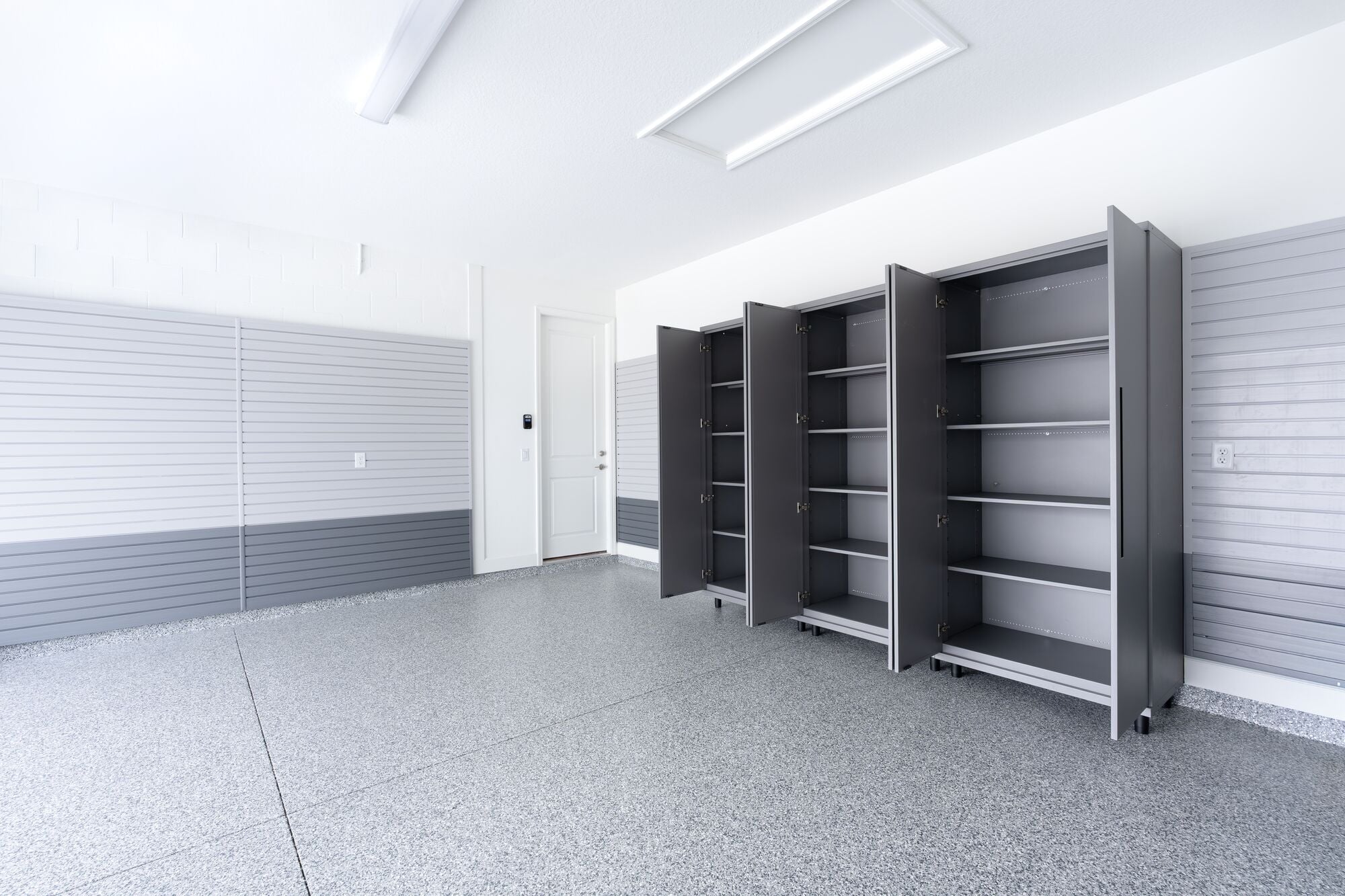
Flooring is one layer of a functioning garage. Your floor choice affects how cabinetry sits flush to the surface, how slatwall systems connect at the base, and how overhead storage loads transfer through the slab.
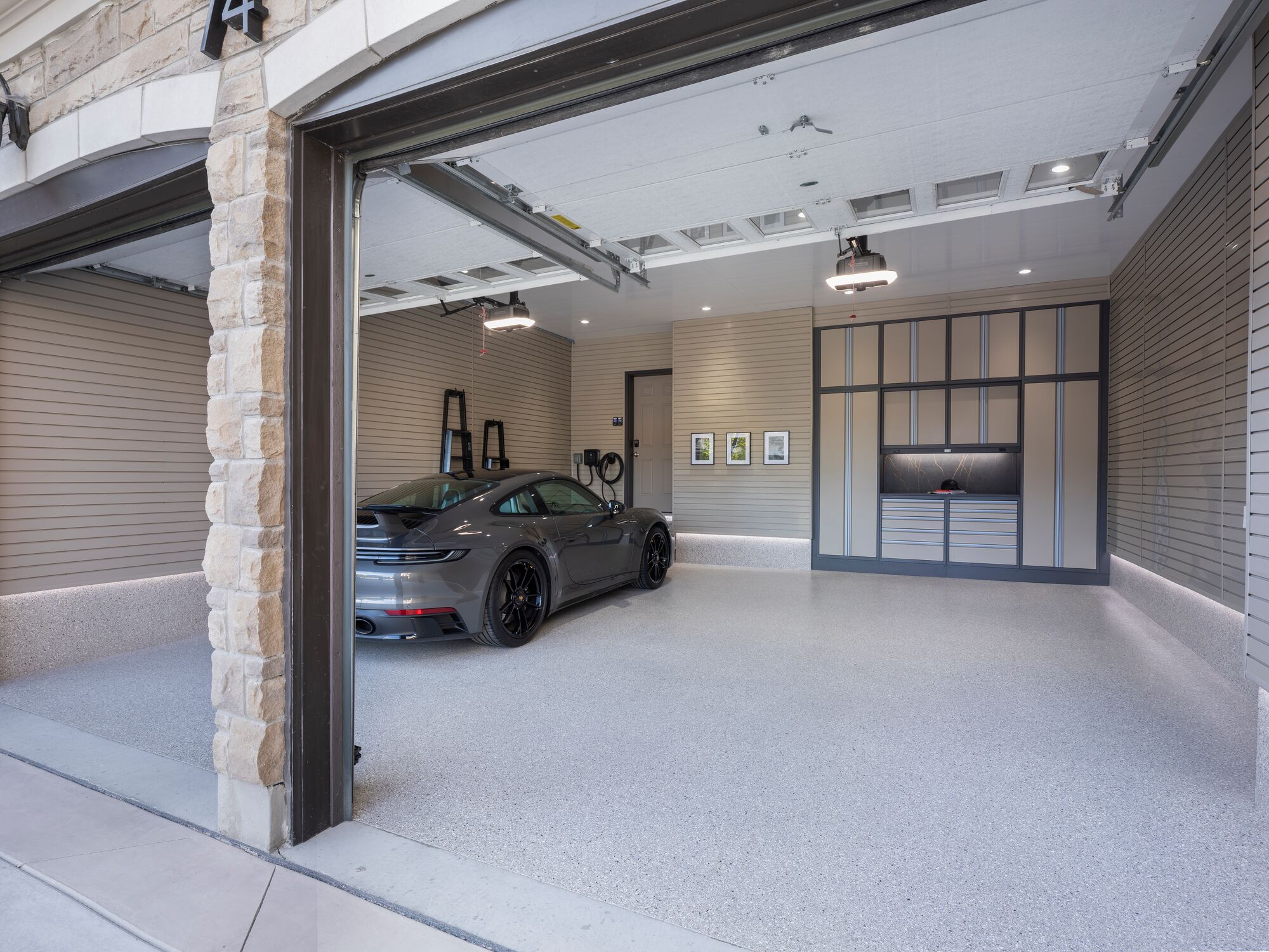
A coating that works in isolation may not perform well once cabinets, workbenches, and storage racks are installed on top of it. Garage Living designs complete garage environments where flooring, cabinetry, and storage work as an integrated system rather than separate products installed by different contractors.
10. Is the installer insured and experienced with residential garages?
Commercial flooring contractors and residential garage specialists approach the work differently. A company that primarily coats warehouse floors may not account for the specific demands of a home garage: vehicle parking patterns, temperature swings from open doors, and the need for a finished appearance.
Ask for proof of liability insurance and workers' compensation coverage. Confirm the installer has experience with residential polyaspartic or epoxy systems. Installers who specialize in garage design understand how flooring integrates with cabinetry, lighting, and storage layout for a cohesive result.
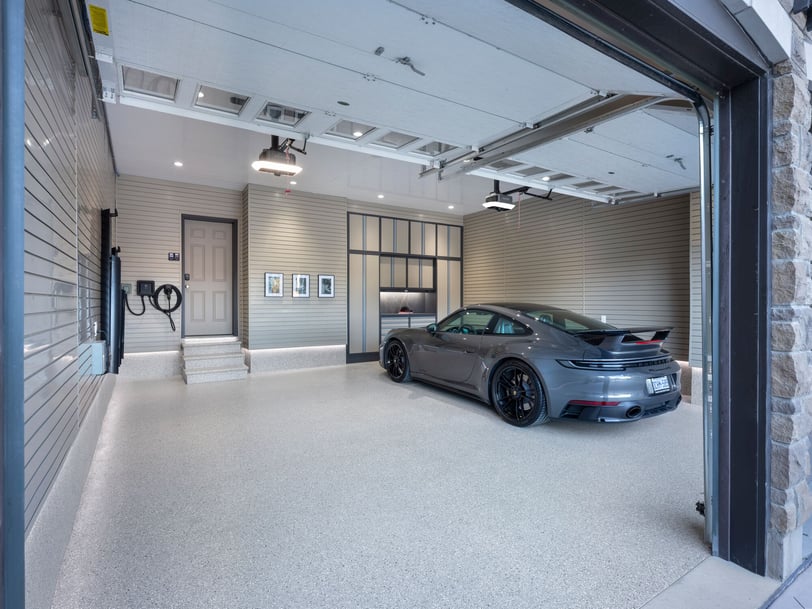
How to choose garage flooring that performs for years
The right garage floor starts with the right questions. Focus on moisture testing, surface preparation, chemical resistance, and cure time before comparing colors or finishes. Those four factors determine whether your coating performs under real conditions or fails during the first year.
Garage Living builds durable flooring systems around Floortex polyaspartic coatings, paired with expert surface preparation and professional installation. If you are planning a garage renovation, a free design consultation can help you evaluate your slab conditions and choose a flooring system designed for your specific garage.
FAQs about durable garage flooring
What is the most durable type of garage floor coating
Polyaspartic coatings rank among the most durable options for residential garages. They resist abrasion, chemicals, UV exposure, and hot tire pickup more effectively than epoxy or urethane alternatives.
Garage Living installs Floortex polyaspartic coatings that bond deep into concrete for long-lasting adhesion and surface protection.
How long does a polyaspartic garage floor coating last
A professionally installed polyaspartic coating typically lasts well over a decade with routine maintenance. Longevity depends on surface preparation quality, concrete condition, and daily wear patterns.
Proper diamond grinding before application ensures the coating grips the concrete at a mechanical level.
Can garage floor coatings handle moisture from below the slab
Not all coatings handle sub-slab moisture well. Moisture vapor transmission can cause bubbling and delamination if the concrete is not tested beforehand.
A calcium chloride test or in-situ relative humidity test identifies whether a vapor barrier is needed before coating.
What causes garage floor coatings to peel or flake
Poor surface preparation is the most common cause. Inadequate grinding, leftover sealers, or excessive moisture prevent the coating from bonding properly to the concrete surface.
Skipping a moisture test is the second most frequent cause of early coating failure in residential garages.
How soon can you park on a newly coated garage floor
Polyaspartic coatings allow vehicle traffic in 24 to 48 hours after application. Epoxy coatings require longer cure times, often five to seven days before full vehicle use.
Garage Living uses fast-curing Floortex coatings that minimize garage downtime during installation.
Does garage floor coating increase home resale value
A professionally coated garage floor contributes to a cleaner, more finished appearance that buyers notice during walkthroughs. Finished garages signal that the home has been well maintained.
Garage Living helps homeowners increase home resale value through integrated garage renovations that include flooring, cabinetry, and storage.