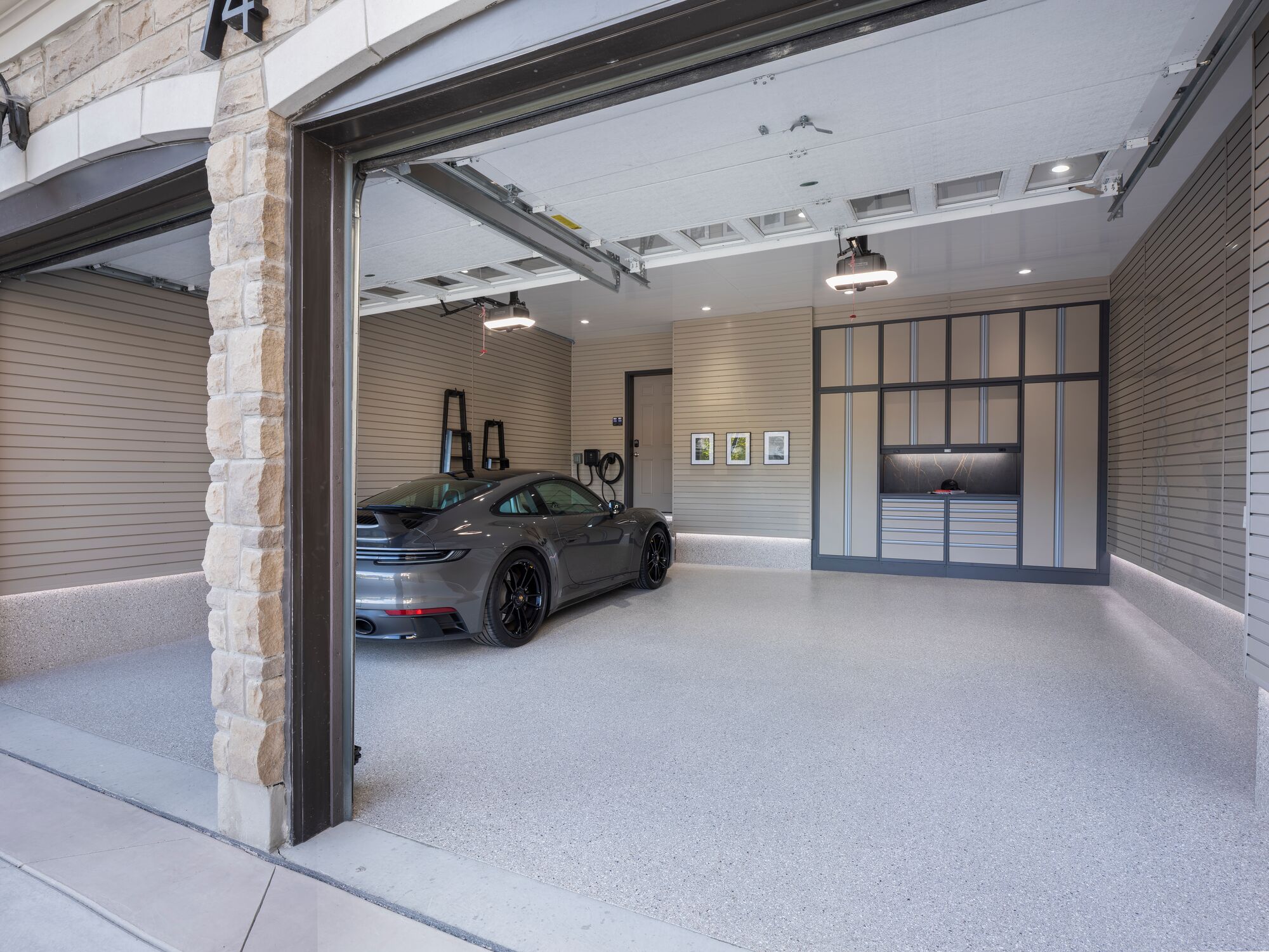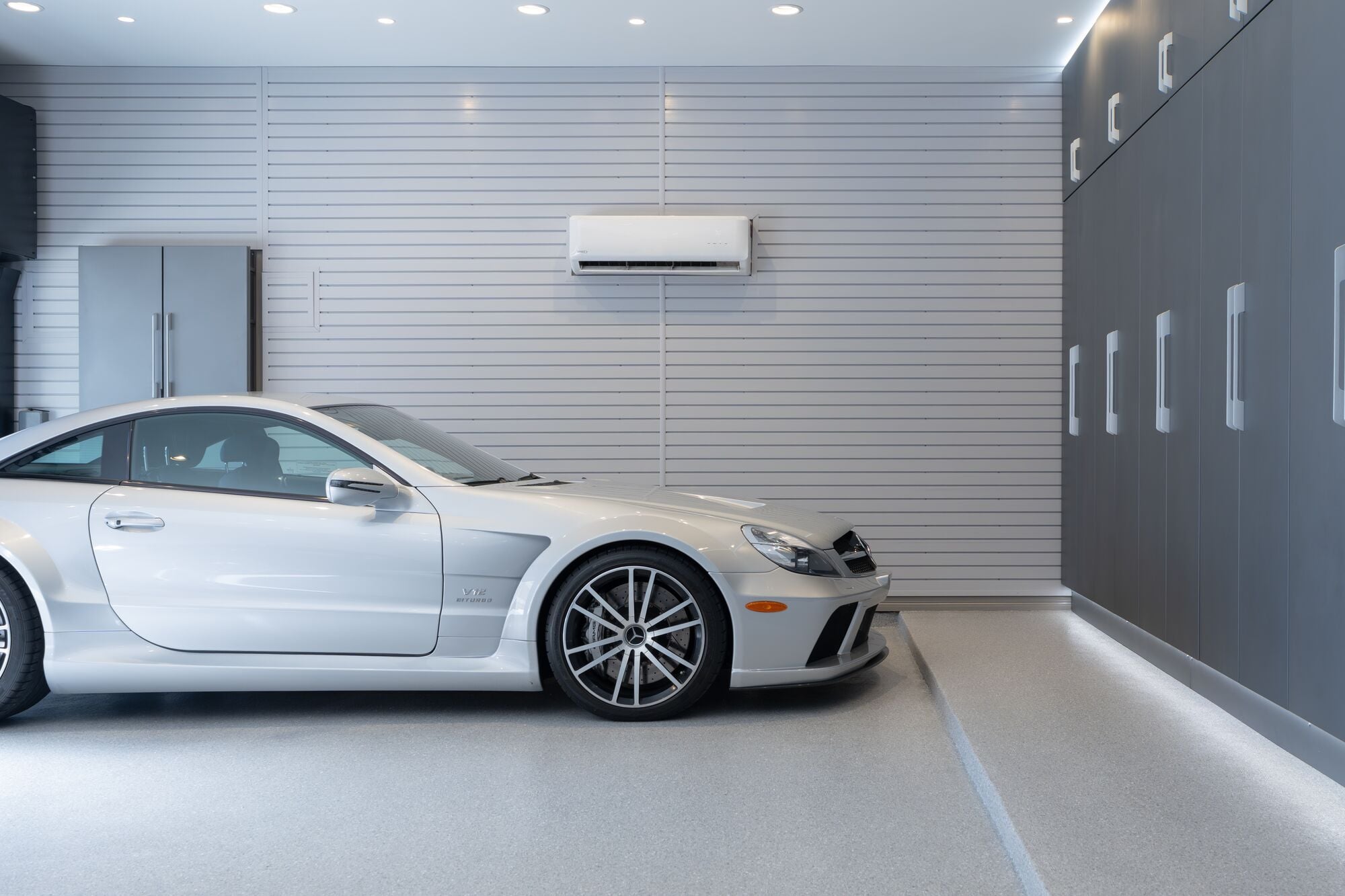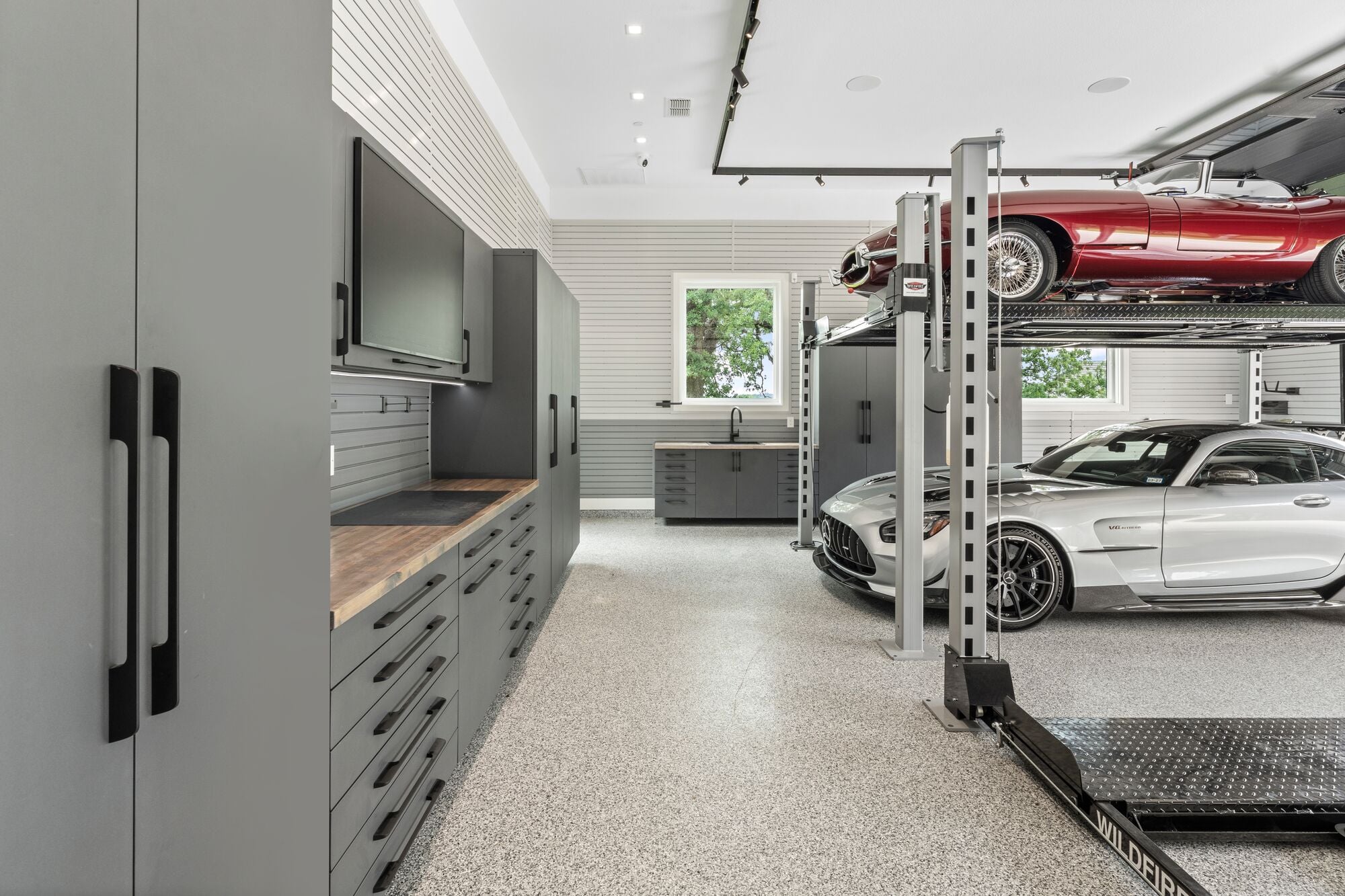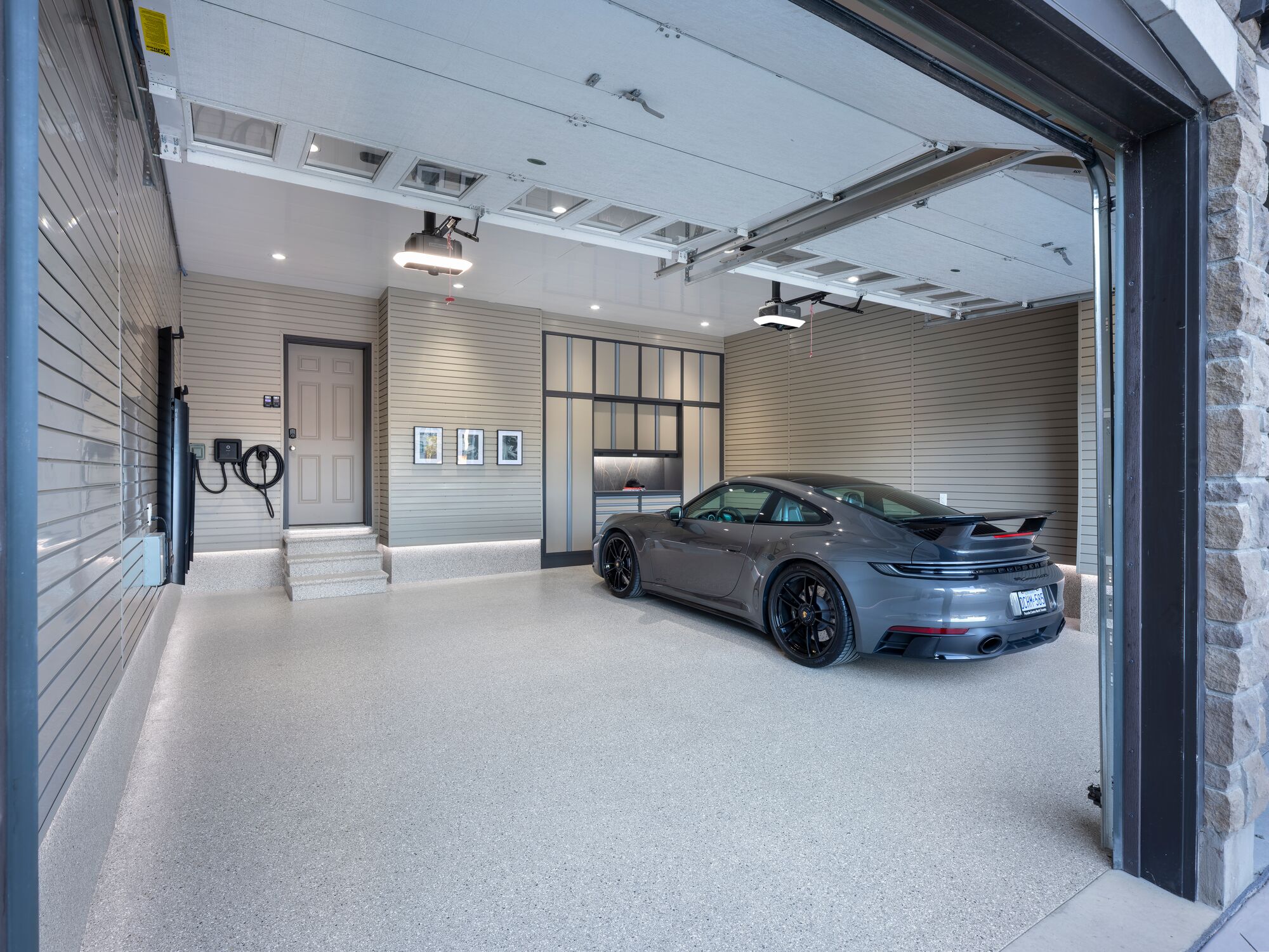
Your garage floor sets the stage for every storage system, cabinet, and organizational feature that follows. If you skip the right flooring questions before adding custom storage, you risk coating failures, mismatched designs, and systems that underperform within a few years.
Garage Living helps homeowners plan flooring and storage as one integrated project, so every component works together from day one. This guide covers eight questions experienced designers recommend asking before your garage makeover begins.
Knowing what to evaluate upfront saves time, protects your investment, and leads to a garage that performs well under real daily conditions for years to come.
Garage flooring questions before storage
- Concrete condition directly affects coating adhesion, so a professional assessment should come before any product selection.
- Polyaspartic coatings outperform traditional epoxy in UV stability, cure speed, and hot tire resistance for daily-use garages.
- Flooring and storage planned together prevent sequencing conflicts that lead to visible gaps and premature wear.
- Garage Living designs complete garage environments where flooring, cabinetry, and wall storage function as one system.
- Moisture testing and proper surface preparation account for the majority of long-term coating performance success.
Garage flooring questions to ask before adding custom storage
1. What condition is your concrete in?
Cracks, pitting, oil stains, and moisture issues in your concrete slab will undermine any coating applied on top. Experienced installers inspect the slab for structural damage, embedded contaminants, and signs of vapor drive before recommending a solution.
Hairline cracks may only need filling, while deeper structural issues could require patching or grinding. Skipping this step is the most common reason garage floor coatings peel or bubble within the first year. A thorough concrete assessment before product selection protects both the coating and the storage systems anchored above it.
2. Has the slab been tested for moisture?
Moisture moving through concrete is invisible, but it causes coating delamination faster than almost any other factor. According to professional installers, moisture-related issues account for a significant share of floor coating failures in residential garages.
Industry-standard testing methods, such as ASTM F2170 relative humidity probes and ASTM F1869 calcium chloride tests, measure vapor emission rates that a simple visual inspection cannot detect. If your installer does not include moisture testing as part of the preparation process, that is a red flag worth addressing before any work begins.
3. Which coating type suits your garage use?
The two most common residential garage coatings are epoxy and polyaspartic. Epoxy bonds well to prepared concrete and has been used for decades, but it requires multiple days of cure time and can yellow under UV exposure from open garage doors.
Polyaspartic coatings cure in hours, maintain color stability in direct sunlight, and resist hot tire pickup more effectively. For garages that handle daily vehicle traffic and temperature swings, polyaspartic systems tend to deliver more consistent long-term results. Garage Living's Floortex coating uses polyaspartic technology designed specifically for residential conditions.
4. Should flooring go in before or after storage?
In nearly every case, the floor should be coated before cabinets, slatwall systems, and overhead racks are installed. Coating the full slab first creates a continuous, finished surface with no visible transitions or uncoated patches beneath storage units.
When flooring and storage are installed by separate contractors on different timelines, sequencing mistakes become common. Cabinets may sit on uncoated concrete, edges may not align, and the finished result often looks pieced together rather than intentional. Planning both flooring and storage as a single project avoids these issues entirely.
5. How will heavy cabinets affect the coating?
Steel cabinetry, workbenches, and overhead racks concentrate weight on specific points across your garage floor. A professionally applied coating is designed to handle this, but thinner or improperly cured coatings can crack or indent under sustained pressure over time.
Ask your installer how the coating system performs under concentrated loads and daily use. Garage Living's GL Signature Steel Cabinetry, built with 18-gauge fully welded steel, is engineered to work with the Floortex coating system so neither component compromises the other during years of regular use.
6. What preparation work does the installer include?
Surface preparation determines whether a coating bonds properly or begins failing within months. Professional prep typically includes cleaning, degreasing, crack repair, and mechanical grinding or shot blasting to create an anchor profile that the coating can grip effectively.
Installers who skip preparation steps or rely on acid etching alone often produce coatings that peel under real garage conditions. Every Floortex installation by Garage Living begins with thorough surface preparation, including filling damaged areas and removing embedded contaminants, before any coating material is applied.
7. Does the flooring color work with your storage design?
Your floor color affects how the entire garage looks once cabinets, wall panels, and accessories are in place. Lighter tones brighten the space and make it feel larger, while darker blends create contrast and conceal dirt between cleanings.
Choosing a floor color in isolation often leads to a garage that looks disconnected once storage is added. During a Garage Living design consultation, your designer compares Floortex color options alongside cabinetry finishes, slatwall panels, and accessories so every element complements the others.
8. What warranty and support come with the floor?
A coating warranty reflects the installer's confidence in both materials and workmanship. Ask what the warranty covers, how long it lasts, and whether the company provides ongoing support after the project is complete and you are using the space daily.
Garage Living backs its Floortex floor coating system with a limited warranty and provides homeowners with maintenance guidance for long-term care. Because Garage Living handles the entire garage transformation, support extends beyond the floor to include cabinetry, storage, and every other component installed as part of your project.
How to match your garage floor to your storage plan
Choosing the right garage floor becomes straightforward when you evaluate your concrete condition, coating options, and storage layout as connected decisions rather than separate purchases.
Garage Living simplifies this process by designing flooring, cabinetry, and wall organization as one cohesive system. From your complimentary design consultation through professional installation, every detail is planned to work together for long-term performance.
If you are planning a garage makeover that includes custom storage, start with the floor. A complimentary consultation with Garage Living can help you map out the right sequence and select materials that support your lifestyle for years to come.
FAQs about garage flooring before storage
Can you install garage storage without coating the floor first?
You can, but it often leads to complications. Uncoated concrete beneath cabinets collects dust and moisture that can spread to surrounding areas. Coating the full slab first creates a protected, finished surface that simplifies cleaning and improves the overall appearance of your garage.
How long does a polyaspartic garage floor coating take to cure?
Polyaspartic coatings typically allow foot traffic within hours and vehicle traffic within 24 hours. This is significantly faster than traditional epoxy, which often requires five to seven days of cure time before you can park on the surface again.
What happens if moisture is found during concrete testing?
If moisture levels exceed the coating manufacturer's specifications, installation should be delayed until the source is addressed. Remediation options include moisture-mitigating primers or addressing drainage issues beneath the slab. Proceeding without correction risks delamination.
Does Garage Living handle both flooring and storage installation?
Garage Living designs and installs complete garage environments. Flooring, cabinetry, slatwall systems, overhead storage, and accessories are all planned and installed by one team. This integrated approach eliminates the coordination challenges of hiring multiple contractors.
How do you choose between polyaspartic and epoxy coatings?
Polyaspartic coatings offer faster curing, better UV stability, and improved resistance to hot tire pickup. Epoxy has a longer track record and bonds well to properly prepared concrete. For garages with daily vehicle use and sun exposure, polyaspartic systems generally deliver more consistent long-term results.
Will a coated garage floor increase home resale value?
A professionally finished garage with coordinated flooring, storage, and organization creates a more functional and visually appealing space. According to National Association of Realtors remodeling data, garage renovations that improve usability and appearance tend to appeal to prospective buyers and add perceived value to the home.