.jpg)
Your garage floor has to handle road salt in January and scorching hot tires in August. Those two extremes alone explain why so many coatings crack, peel, or yellow long before they should. The real question is which durability factors separate a floor that lasts a decade from one that fails in two years.
This article breaks down the specific conditions that determine how well a durable garage flooring system performs across U.S. climates. Garage Living designs complete garage environments built to handle exactly these challenges, so the factors below come straight from what experienced installers observe in the field.
By the end, you'll know what to look for, what to ask about, and which details matter most when evaluating your next garage floor coating.
What makes garage flooring durable in U.S. climates
- Temperature flexibility in a coating prevents cracking caused by seasonal concrete expansion and contraction cycles.
- Moisture testing before application is the single most important step for ensuring long-term coating adhesion.
- UV-stable topcoats keep garage floors from yellowing in sun-exposed garages across southern and western U.S. states.
- Chemical resistance to road salt, oil, and de-icers protects floors in cold-climate regions year after year.
- Garage Living applies Floortex polyaspartic coatings engineered to perform in temperatures from -40°F to 104°F.
Durability factors that matter most for residential garage floors
1. Thermal flexibility of the coating system
Concrete expands in summer heat and contracts when temperatures drop. A coating that cannot flex with that movement will crack, chip, and delaminate over a single season.
Polyaspartic coatings are up to 98% more flexible than standard epoxy formulations. That elasticity lets them absorb thermal stress instead of fracturing under it, which is critical in regions with wide seasonal swings.
If you live anywhere with a 50°F or greater annual temperature range, flexibility should be one of the first specifications you check. Ask your installer for the coating's elongation rating before committing.
2. Concrete moisture levels before application
Excess moisture trapped in concrete is the leading cause of coating failure. When a coating is applied over damp concrete, it cannot bond properly and will eventually bubble or peel.
Professional installers test moisture vapor emission rates before any coating touches the slab. According to a moisture testing guide published by Coated Local, skipping this step accounts for most adhesion failures in residential garage floors.
If your garage sits on a slab without a vapor barrier, this test is non-negotiable.
3. UV stability for sun-exposed garages
Every time you open a garage door, sunlight hits the floor. In southern and western states, that UV exposure is intense enough to yellow and degrade coatings that lack proper stabilizers.
Polyaspartic coatings include UV-stable topcoats that maintain their gloss and color clarity over years of direct sun exposure. Epoxy coatings do not include built-in UV protection and will visibly discolor over time.
If your garage faces south or west, UV stability should rank high on your evaluation list. A yellowed floor is more than cosmetic; it signals coating degradation at the surface level.
4. Chemical resistance to road salt and de-icers
In northern states, vehicles track road salt, magnesium chloride, and calcium chloride into the garage from November through April. Those chemicals eat into unprotected concrete garage floors, causing pitting and spalling over repeated freeze-thaw cycles.
Garage Living's Floortex polyaspartic coating resists salt stains and chemical penetration, keeping the concrete sealed underneath. That kind of resistance matters most in freeze-thaw climates where salt contact is a daily occurrence for months.
Oil drips and engine coolant also test a coating's integrity. Polyaspartic chemistry holds up against automotive fluids that would stain or soften lesser systems.
5. Hot tire pickup resistance
When you park after a long drive, your tires can reach temperatures above 200°F. That heat softens certain garage floor coatings enough for the rubber to bond with the surface, leaving permanent marks or pulling the coating off entirely.
Hot tire pickup is one of the most common failure modes for budget epoxy kits. Polyaspartic formulations have a higher heat tolerance and resist this bonding reaction, keeping the surface intact even after repeated exposure to hot tires throughout summer months.
6. Bond strength and concrete penetration
A coating is only as durable as its bond to the slab. Polyaspartic coatings penetrate into the pores of the concrete and cure below the surface, forming a mechanical and chemical bond.
Epoxy coatings typically sit on top of the concrete and create only a topical surface bond. That difference becomes obvious in climates with heavy vehicle traffic and temperature cycling, where topical bonds fail faster under repeated stress.
Diamond grinding the surface before application opens the concrete's pores and dramatically improves adhesion for any coating type.
7. Abrasion and impact resistance
Dropped tools, dragged storage bins, rolling toolboxes, and the constant weight of parked vehicles all wear on a garage floor. A durable coating needs to resist abrasion and absorb impact without chipping or scuffing.
Floortex polyaspartic coatings have extremely high abrasion resistance, rated well above standard epoxy systems. Garage Living applies this coating at a thickness designed for heavy residential use, which means your floor handles daily wear without showing damage.
For households that use the garage as a workshop or hobby space, this level of impact resistance keeps the surface looking clean for years.
8. Application temperature range
Epoxy coatings require installation temperatures between 50°F and 90°F, which limits application to a narrow window in many U.S. regions. If you live in a state with cold winters or extreme summer heat, scheduling can become a real obstacle.
Polyaspartic coatings install in a much wider temperature range. Garage Living's Floortex system can be applied in conditions from -40°F to 104°F, making it possible to schedule your garage renovation in any season.
That year-round flexibility means you don't have to wait for spring or summer to get your project started.
9. Cure time and return-to-service speed
How quickly a coating cures affects both durability and convenience. Slow-curing systems stay vulnerable to dust, debris, and accidental contact for days, which can compromise the final surface quality.
Floortex polyaspartic coatings cure fast enough that a full garage floor project can be completed in as little as one day. In warmer conditions, light foot traffic is safe after 12 hours and vehicle traffic after 96 hours.
Faster curing also reduces the risk of environmental contaminants affecting the finish, which is especially important in dusty or humid regions.
10. Surface preparation quality
No coating outperforms poor preparation. Experienced installers diamond grind the entire slab, repair cracks and spalling, and remove every contaminant before applying the first coat.
Skipping or rushing this step is the number one reason garage floor coatings fail, regardless of how premium the product is. A mid-tier coating on a properly prepared surface will outperform a top-tier coating on a poorly prepared one.
Garage Living includes full surface preparation in every flooring project, including diamond grinding, crack repair, and moisture assessment, so the coating bonds correctly from day one.
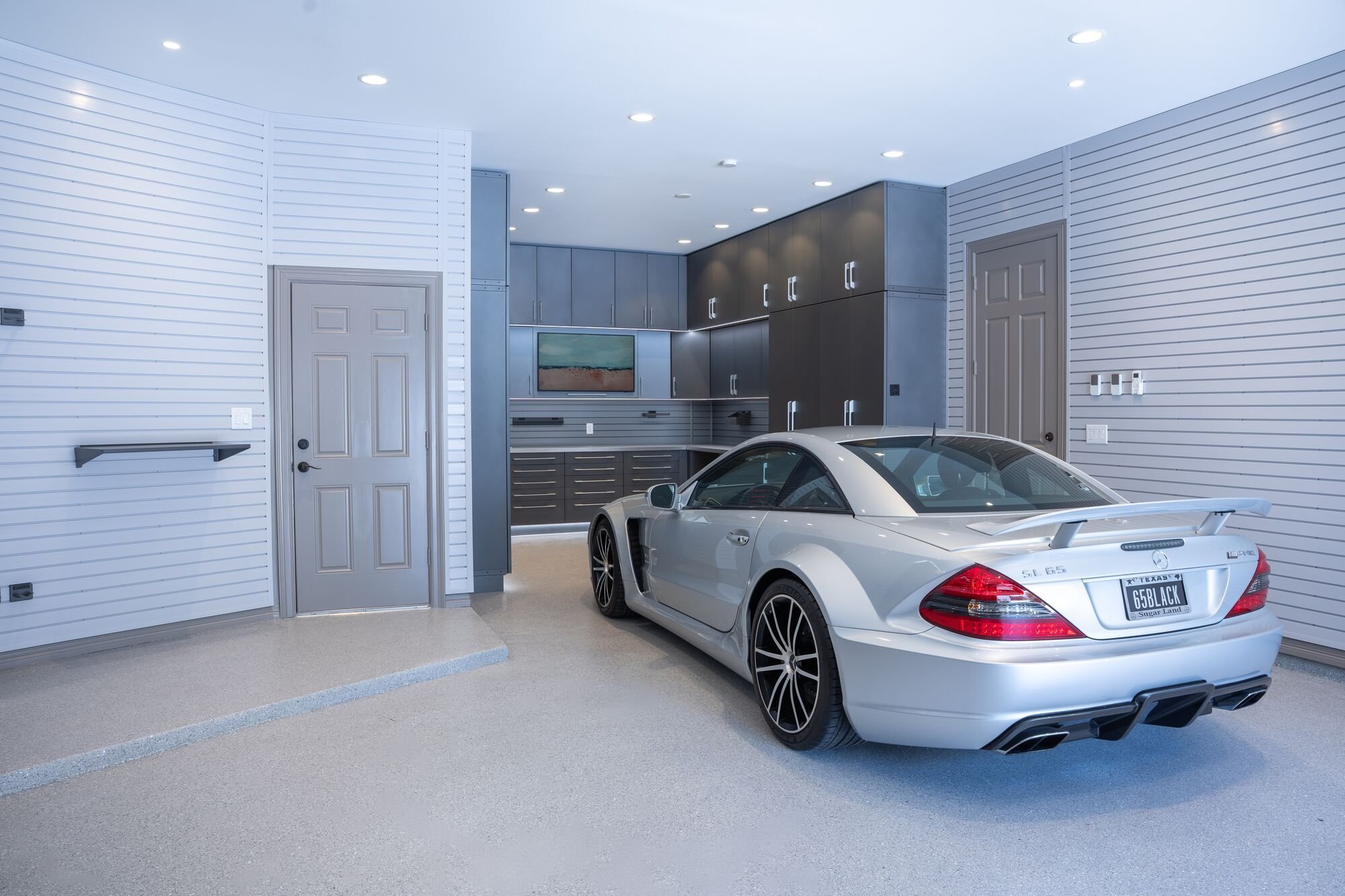
How to choose a garage floor coating that lasts
Durability comes down to matching the right coating chemistry to your climate, your concrete's condition, and how you actually use the space. A floor that parks two vehicles daily in a Minnesota winter needs different performance characteristics than a workshop floor in Arizona.
Garage Living builds every flooring project around these factors, starting with a design consultation that evaluates your slab, your climate, and your daily routine. The result is a garage floor engineered to perform for years, not months.
If you're ready to invest in a floor that handles what your climate and lifestyle throw at it, schedule a complimentary consultation to see how a professionally designed solution compares to what you have now.
FAQs about what makes garage flooring durable in U.S. climates
How does climate affect garage floor coating durability?
Temperature extremes cause concrete to expand and contract, which stresses rigid coatings until they crack. Humidity and salt exposure accelerate chemical breakdown. A coating rated for your specific climate conditions will last significantly longer than one designed for mild environments.
What is the most durable type of garage floor coating?
Polyaspartic coatings outperform epoxy in flexibility, UV stability, chemical resistance, and cure speed. Garage Living uses Floortex polyaspartic coating exclusively because it handles the widest range of residential garage conditions across U.S. climates.
Why do garage floor coatings peel or flake?
Most peeling traces back to moisture in the concrete or inadequate surface preparation. When a coating cannot form a strong bond with the slab, it lifts under thermal stress or vehicle traffic. Professional moisture testing and diamond grinding prevent these failures.
Can garage floor coatings be installed in cold weather?
Epoxy coatings require temperatures above 50°F, which rules out winter installation in many states. Polyaspartic systems install at temperatures as low as -40°F. Garage Living's Floortex coating can be applied year-round in virtually any U.S. climate.
How long should a professionally installed garage floor coating last?
A professionally applied polyaspartic coating should last a decade or more with normal residential use. Factors like vehicle traffic volume, chemical exposure, and maintenance habits influence longevity. Floortex projects include a ten-year limited warranty.
What preparation does a garage floor need before coating?
The concrete needs diamond grinding to open its pores for bonding, crack and spall repair, thorough cleaning, and moisture testing. Garage Living handles all of this as part of every flooring project, ensuring the coating bonds correctly to the slab.