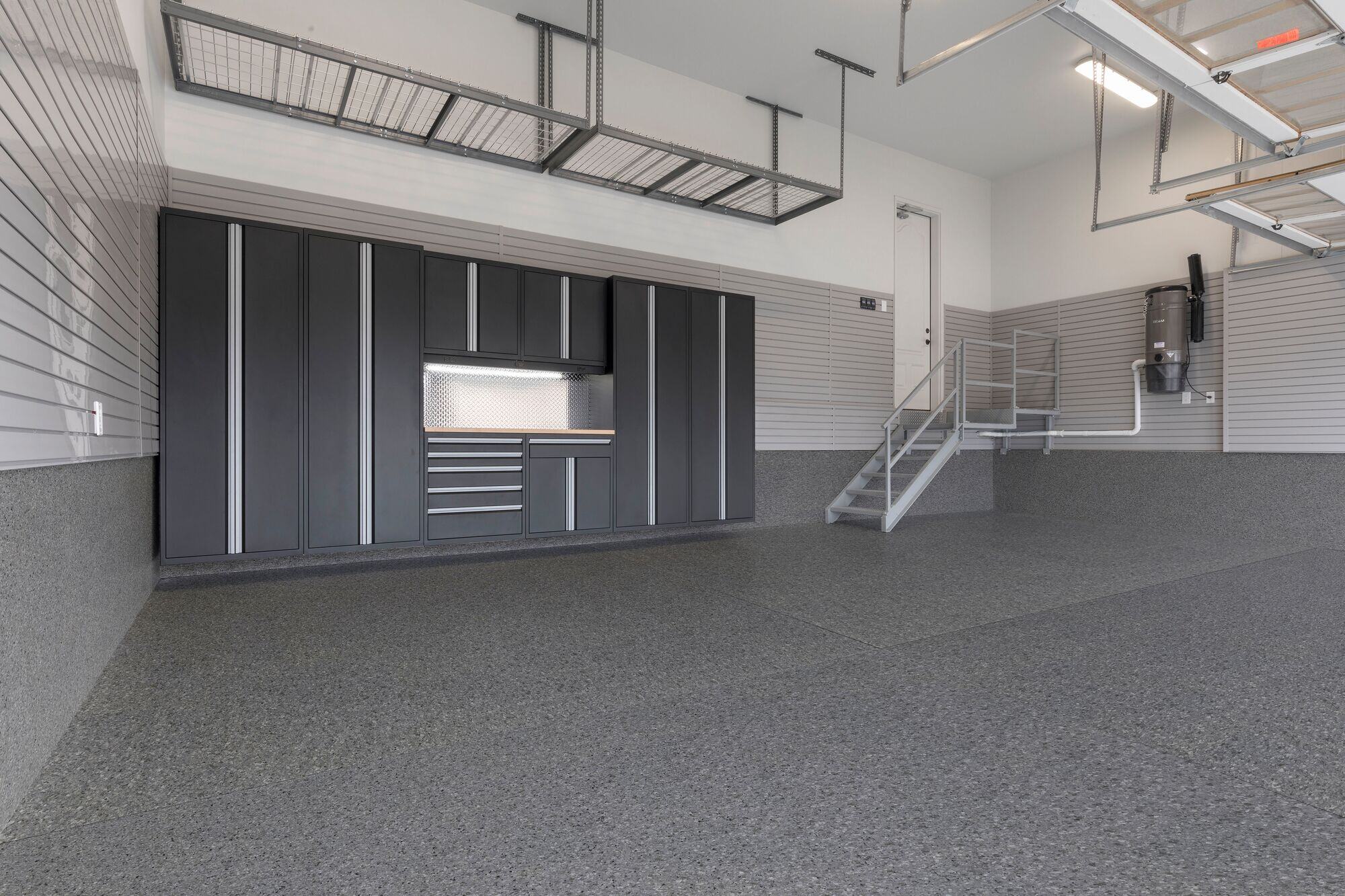
Your garage floor takes a beating. Between vehicle traffic, oil drips, road salt, heavy tools, and temperature swings, it's arguably one of the hardest-working surfaces in your entire home. Yet it's also one of the most overlooked when it comes to protection and maintenance. This guide ranks the most common garage floor coating options from worst to best, breaking down what works, what doesn't, and why. We'll also cover how to evaluate different coating systems, common mistakes to avoid, and how to match your flooring choice to your actual lifestyle.
What Makes a "Good" Garage Floor Coating?
Before diving into the rankings, let's establish what actually makes a garage floor coating worth your investment. Here are the key factors you should compare:
Durability and Resistance
Can it handle impact from dropped tools? Will it resist abrasion from foot traffic? Most importantly, will it stand up to hot-tire pickup?
Chemical and Stain Resistance
Your garage floor will encounter oil drips, battery acid, antifreeze, road salt, and who knows what else. A premium floor coating resists these challenges rather than absorbing them.
Bond and Adhesion
The strongest coating in the world means nothing if it doesn't properly bond to your concrete. Poor adhesion leads to peeling, bubbling, and early failure.
Installation Requirements
Some coatings demand extensive prep work, specific temperature conditions, and professional expertise. Others promise DIY-friendly application but often underdeliver on performance.
Maintenance and Longevity
How often will you need to recoat? What cleaning is required? A coating that needs replacement every few years isn't really saving you money.
Aesthetic Options
Beyond basic gray, what finish options exist? Can you add decorative flakes, choose custom colors, or create designated zones?
Total Cost of Ownership
Don't just look at upfront costs. Factor in prep work, application, maintenance, and how soon you'll need to replace it. Short-term coatings often need to be replaced again and again, while a professionally installed, long-lasting system delivers real value from day one.
The "Worst" Garage Floor Options: Low Cost, Low Protection
Let's start at the bottom of the rankings. These options are popular for various reasons (usually price or perceived convenience) but they consistently underdeliver for serious garage use.
Basic Floor Paint
What it is: Standard latex or oil-based paint marketed for concrete floors. You'll find it at every home improvement store, and it's the go-to for many DIYers looking for a quick, cheap upgrade.
Why people choose it: It's inexpensive (often under $30 per gallon), familiar, and easy to apply with basic tools. No special equipment needed.
Where it fails: Floor paint sits on top of concrete rather than bonding to it at a molecular level. It has minimal thickness, poor abrasion resistance, and almost no chemical resistance. In a working garage, you'll see chips, flakes, and peeling within months. Hot tires will lift it right off. Oil stains will penetrate it. And once it starts failing, it looks worse than bare concrete.
When it might make sense: If you have an extremely light-use space (think: storage only, no vehicles, minimal foot traffic) and need a very short-term cosmetic fix while you save up for something better, paint can tide you over. But go in with realistic expectations.
Concrete Stain and Thin Decorative Coatings
What it is: Acid-based or water-based stains that penetrate concrete to add color, sometimes topped with a thin sealer.
Why people choose it: Stains can create beautiful, unique finishes with a natural, mottled look. They're popular in decorative applications and can genuinely transform how concrete looks.
Why it's inadequate for garages:
- Stains add color but almost no protection.
- They don't create a protective film, don't resist chemicals, and don't stand up to abrasion.
- The thin sealers sometimes applied over them offer marginally more protection but still fall far short of what a garage demands.
- You'll see wear patterns, staining, and damage quickly under normal garage use.
Better application: Interior spaces with light foot traffic. Think areas like decorative basement floors, sunrooms, or retail spaces. Not working garages.
DIY Sealers and Thin Acrylic/Latex Coatings
What it is: Clear or tinted sealers and thin acrylic coatings designed to protect concrete from moisture and provide a slight sheen.
Why people choose it: They promise an easy application, enhanced appearance, and some level of protection at a low price point. Many are marketed specifically for garage use.
The reality: These products create a very thin film (often just a few mils thick) that simply can't withstand the demands of a garage environment. They'll scuff, scratch, and wear through quickly. Chemical resistance is minimal. Hot-tire pickup is common. And because they're thin, once they start failing, the failure spreads rapidly.
The maintenance trap: Many of these products require reapplication every 1-2 years to maintain even their modest protection. When you factor in the repeated cost and labor, that "cheap" option gets expensive fast.
Interlocking Floor Tiles and Mats
What it is: Rigid plastic tiles or flexible roll-out mats that cover the concrete surface. Technically not a coating, but often marketed as a garage floor upgrade.
Why people choose it: Quick installation with no surface prep, no drying time, and the ability to hide existing concrete damage. They're also removable if you're renting or might want to change things later.
The downsides: These coverings don't actually protect or improve your concrete. They just hide it. Moisture can become trapped underneath, potentially worsening concrete problems. Tiles can shift, pop apart, or warp over time, especially under heavy loads or temperature swings. Dirt and debris can also work their way into seams. And, while some heavy-duty commercial tiles perform reasonably well, the budget options sold at big-box stores often disappoint.
When they work: As a temporary solution, in rental situations, or in specific zones (like a dedicated gym area or workspace) where you want padding or easy replacement. Not ideal as a whole-garage, long-term solution.
Concrete Resurfacer Alone (Without a Proper Topcoat)
What it is: A cement-based overlay that creates a fresh, smooth concrete surface over damaged or worn floors.
Why people choose it: It's an effective way to repair pitting, spalling, and minor cracks, giving you a "new" concrete surface at a fraction of the cost of full replacement.
The limitation: Resurfacer addresses the substrate but doesn't provide the protection a garage floor needs. Without a proper coating system on top, your "new" concrete surface will stain, mark, and wear just like the old one. It's a great first step in floor restoration but shouldn't be the last step.
Mid-Tier Garage Floor Options: Better Protection, But With Trade-Offs
These options represent a significant step up from paint and sealers. Sure, they can deliver good results in some situations. However, they come with a few limitations you need to consider.
Epoxy Floor Coatings
What it is
Two-part epoxy systems that chemically bond to concrete, creating a hard, durable surface. Available in DIY kits and professional-grade formulations.
The appeal
Epoxy has earned a solid reputation for garage floors. It's significantly harder and more durable than paint, offers good chemical resistance, bonds well to properly prepared concrete, and comes in various colors and decorative options. A quality epoxy floor can look great and perform well for years.
The trade-offs
Epoxy is sensitive to conditions. Moisture in the concrete, high humidity during application, or temperatures outside the recommended range can cause adhesion failure. Many DIY epoxy failures trace back to inadequate moisture testing or poor application conditions.
Surface preparation is critical and labor-intensive. The concrete must be properly profiled (usually through grinding or acid etching) and thoroughly cleaned. Skip or shortcut this step, and even the best epoxy will fail.
- Epoxy can yellow with UV exposure, which matters if your garage gets significant sunlight.
- Hot-tire pickup can be an issue with some epoxy formulations, especially thinner applications.
- Cure time is relatively long (often 5-7 days) before vehicle traffic is safe.
DIY vs. professional
The epoxy kits at home improvement stores are thinner and less durable than professional-grade systems. They can work for light-duty applications with meticulous preparation, but managing expectations is important. Professional epoxy installations use higher-quality materials applied thicker, with proper surface preparation equipment.
Selection tips
Look for systems with at least 3-4 mils of dry film thickness. Check the warranty carefully. And be honest about whether you're prepared to do the extensive surface prep DIY application requires.
Polyaspartic and Polyurea Hybrid Systems
What it is
Advanced coating technologies that offer significant performance advantages over traditional epoxy. Polyurea is extremely flexible and durable; polyaspartic is a type of polyurea with additional benefits including UV stability.
The advantages
- Much faster cure times. Often same-day return to service, even for vehicle traffic.
- Superior flexibility, which means better resistance to impacts, thermal cycling, and concrete movement.
- Excellent UV stability (no yellowing).
- Better hot-tire pickup resistance than most epoxies.
- Outstanding chemical resistance.
- Can be applied in a wider range of temperatures and humidity levels.
The trade-offs
- Higher material cost than epoxy.
- The fast cure time that's an advantage for users is a challenge for installers — there's less working time, requiring more skill and experience.
- Quality varies significantly between products and installers. A poorly applied polyaspartic system won't outperform a well-applied epoxy.
The verdict: For most homeowners wanting a serious, long-lasting garage floor, a professionally installed polyaspartic or polyurea system represents an excellent balance of performance, durability, and value. The higher upfront cost is typically offset by longer lifespan and lower maintenance.
High-Performance Floor Coverings
What it is: Engineered flooring products designed for demanding environments. Think heavy-duty roll-out flooring, commercial-grade interlocking tiles, or specialty surfaces for specific applications.
When they make sense: These products can be excellent for specific use cases: dedicated workshop areas with heavy equipment, commercial applications, or situations where you need specific properties (anti-fatigue, static dissipation, extreme chemical resistance).
Trade-offs: Cost is typically higher than coatings. Installation may require professional help. And you're covering rather than transforming the concrete, which means the substrate issues remain underneath.
The "Best" Option: Premium, Long-term Performance Systems
At the top of our rankings sit professional-grade polyurea and polyaspartic systems with high-bond chemical anchoring, quality top coats, and comprehensive warranties. These systems represent the current gold standard in garage floor coatings.
What sets them apart?
- Superior chemical bonding that creates a genuine connection with the concrete substrate rather than just sitting on top.
- Excellent resistance to impacts, abrasion, chemicals, UV exposure, and hot-tire pickup.
- Faster cure times that minimize garage downtime.
- Better flexibility that allows the coating to move with the concrete through temperature cycles without cracking.
- More finish options, from solid colors to custom flake blends to high-gloss or satin sheens.
- Longer lifespans that often make them more economical over time despite higher upfront costs.
Expert Tip: When evaluating premium systems, pay attention to installer qualifications, warranty specifics (what's actually covered and for how long), and whether the system addresses your concrete's current condition. Even the best coating can't overcome a poorly prepared substrate or underlying moisture issues.
How Garage Living's Flooring System Fits In
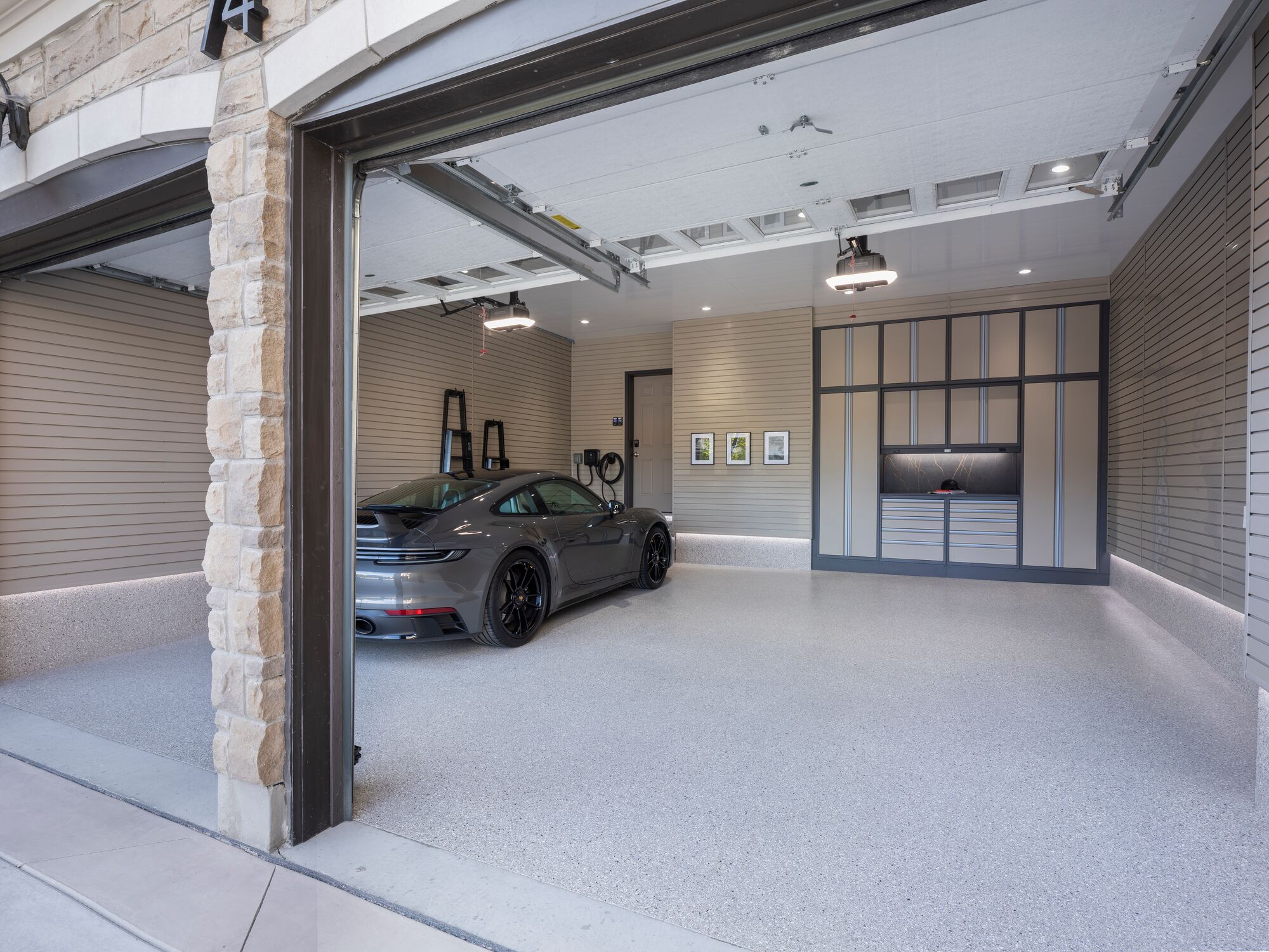
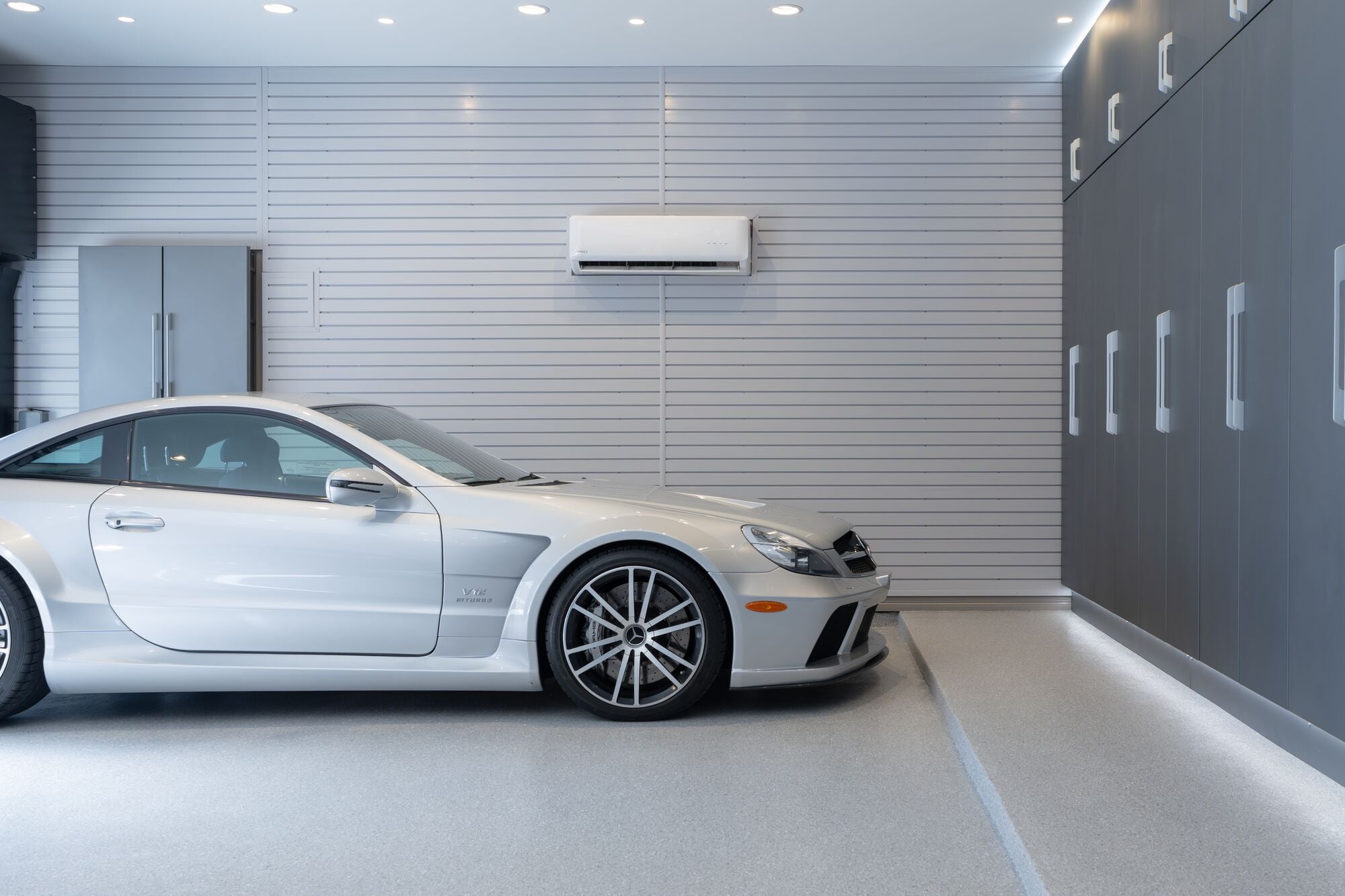
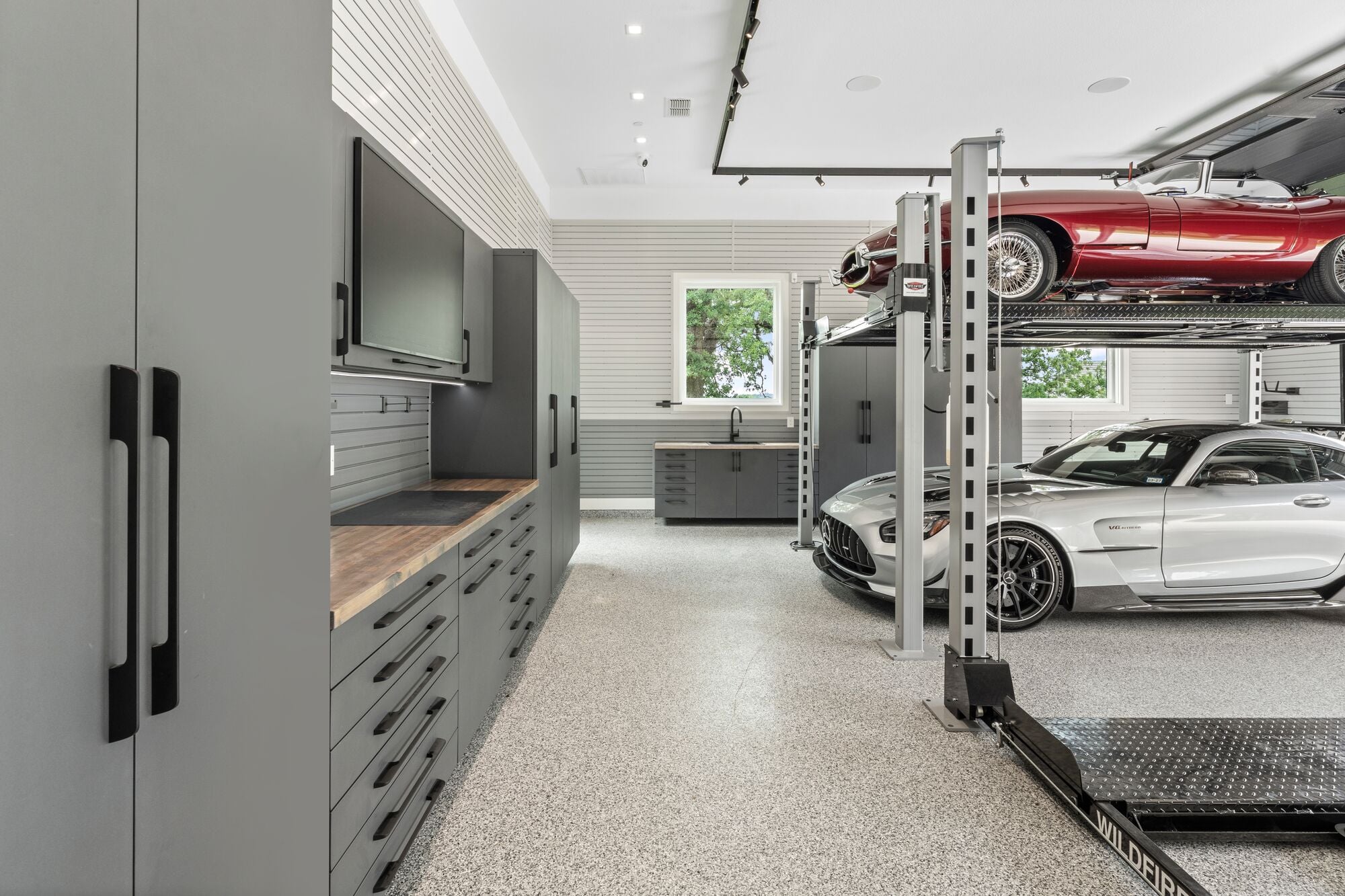
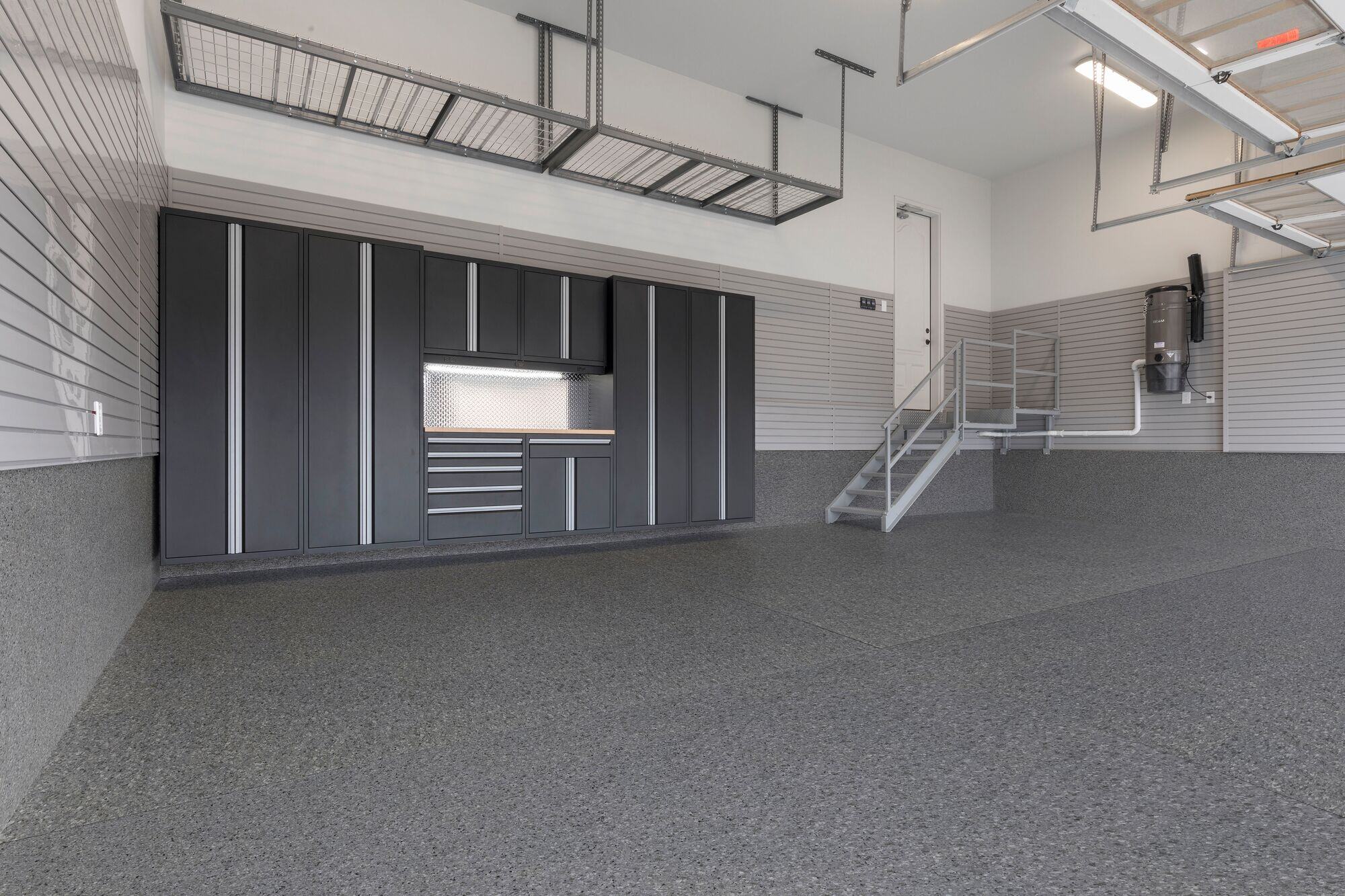
This is where we should mention that at Garage Living, our Floortex garage flooring system is engineered specifically to deliver premium performance across all the criteria we've discussed.
But here's what really sets it apart: we don't think of your garage floor in isolation. Your floor is part of a complete garage ecosystem. It interacts with your storage solutions, your workspace layout, your daily routines.
Our flooring system is designed to integrate with custom cabinetry, slatwall organization, and the overall design of your space. When you're planning zones for parking, walking, working, and storage, the floor ties everything together.
The result? A garage that doesn't just look impressive but actually works better for how you live. That's the difference between buying a coating and investing in a complete flooring solution.

Making The Right Choice For Your Garage
Before selecting any floor system, ask yourself these critical questions:
- What's your concrete's current condition? Cracks, moisture issues, or previous coatings all affect your options. Premium systems include proper prep and repair, while DIY options assume perfect concrete.
- How will you actually use the space? A garage that's purely for parking needs different flooring than a combination workspace, storage area, and weekend hobby zone.
- What chemicals and conditions will it face? Road salt, oil changes, and workshop chemicals demand higher performance than occasional car parking.
- What aesthetic are you after? From solid colors to decorative flake blends to designated work zones, your coating choice affects your design options.
- What's your true budget? Remember to factor in prep work, application costs, maintenance, and replacement timing. That "affordable" option might be your most expensive choice long-term.
- Who's doing the installation? Professional installation costs more but dramatically improves outcomes, especially for higher-performance systems.
As a general rule of thumb, if you're planning to stay in your home more than five years and use your garage for anything beyond basic parking, skip the bottom-tier options entirely. The frustration and replacement costs aren't worth the initial savings.
Common Garage Flooring Mistakes and How to Avoid Them
The number one reason garage floor coatings fail has nothing to do with the coating itself. Rather, it's inadequate surface preparation.
Many homeowners are eager to get to the exciting part (applying the new finish) and rush through or skip essential prep steps. But moisture testing, crack repair, thorough cleaning, and proper etching or grinding aren't optional extras. They're the foundation that determines whether your coating bonds properly and lasts for years or peels up within months.
A premium coating applied to a poorly prepared surface will underperform a mid-tier coating on a properly prepared one every time.
Cost is another area where homeowners often trip up. It's natural to compare prices and lean toward the more affordable option, but the cheapest coating almost never delivers the best value over time. When you factor in how long the finish will last, what maintenance it requires, and the likelihood of needing to strip and re-coat in a few years, that budget option often ends up being the most expensive choice you could make.
If you park vehicles in your garage regularly, you need to understand hot-tire pickup before selecting a coating. When you drive your car, the tires heat up significantly. Park on a coating that can't handle that heat, and the warm rubber can actually lift the finish right off the concrete. This is a common failure mode for cheaper epoxies and many DIY products.
UV exposure is another factor that catches people off guard. Even if your garage doesn't have windows, sunlight enters every time you open the door. Over time, coatings without proper UV stabilizers will yellow, fade, or degrade.
If aesthetics matter to you — and for most people investing in new garage floors, they do — make sure your chosen system can handle sun exposure without discoloring.
How Garage Living's System Stacks Up
Garage Living's flooring solutions address every criterion we've discussed. Our systems feature professional-grade polyaspartic technology, delivering superior bonding, chemical resistance, and longevity.
Our Floortex flooring integrates seamlessly with our complete garage organization systems. Imagine coordinating your floor finish with custom storage cabinets, overhead platforms, and wall organization systems. We offer multiple finish options, from subtle solid colors to dynamic flake blends.
What really sets us apart is our approach. We do more than “just” recoating your floors. We design a complete garage solution. Our experts evaluate your specific needs, recommend the right system, handle all preparation and installation, backing everything with warranties and ongoing support.
Choose the Right Garage Floor Coating For Your Lifestyle
Not all garage floor coatings are created equal… that much should be clear by now.
Making the right choice depends on evaluating your options honestly and thinking beyond just the upfront price tag. Whether your garage is purely functional or central to how you live, there's a flooring solution that fits.
For most homeowners serious about their garage, the path forward is clear: skip the false economy of cheap paints and budget kits. Invest in a system engineered for how garages actually get used.
Lastly, work with a company who understands the complete picture. Not just the floor, but the entire garage as a functional, organized, attractive space.
Browse our project gallery for real-world examples of transformed garages, or visit your nearest Garage Living location to discuss your project with specialists who understand the complete picture.
Please share this post if you found it useful.
See also: