.jpg)
Garage storage is one of the most searched home improvement topics for a reason. Almost every garage starts with good intentions and ends up the same way. Boxes stacked along the walls, sports gear piled in corners, seasonal items buried behind lawn equipment, and barely enough room to open a car door.
What surprises many homeowners is that clutter is rarely the real problem. The issue is usually the garage storage system itself. Many popular options look good on day one but fail under real garage conditions: weight, moisture, temperature swings, and daily use.
This guide ranks the most common garage storage options from worst to best, based on how they actually perform over time. Not how they look in a showroom or online listing, but how they hold up in working garages where vehicles, tools, and life all compete for space.
If your goal is garage storage that stays organized, functional, and usable years from now, this breakdown will help you avoid short-term fixes and choose solutions that make sense for how garages are really used.
What defines good garage storage
Before ranking options, it is important to clarify what actually makes garage storage effective. From a professional standpoint, good storage is not about fitting everything in once. It is about keeping the garage usable long after installation.
Here are the criteria that matter most.
Load capacity and structural support
Garage storage must handle real weight. Not just empty bins, but full totes, power tools, sports equipment, and bulk seasonal items. Systems that rely on light-duty materials or minimal wall anchoring tend to sag, shift, or fail over time.
Floor clearance
One of the most common mistakes in garage storage is keeping everything on the floor. Floor-supported storage makes cleaning harder, traps moisture, and reduces usable parking and walking space. Effective systems lift storage off the floor and keep traffic areas clear.
Adjustability over time
Garages change. Kids grow, hobbies evolve, vehicles change size. Storage that cannot be adjusted or reconfigured often becomes obsolete even if it is still physically intact.
Resistance to moisture and temperature swings
Garages are not climate-controlled living spaces. Storage must handle humidity, cold winters, hot summers, and condensation without rusting, warping, or deteriorating.
Compatibility with vehicle parking
Storage that interferes with door swing, walking paths, or vehicle clearance creates daily frustration. The best garage storage systems are designed around the vehicle first.
Long-term organization
A system should make it easier to stay organized, not harder. If accessing stored items requires moving stacks, climbing unstable shelves, or reorganizing every season, the system is working against you.
The worst garage storage options: short-term fixes that rarely last
These garage storage options are popular because they are easy to buy and quick to install. Unfortunately, they are also the most likely to fail, either structurally or functionally.
Freestanding plastic shelving
What it is: Lightweight, molded plastic shelving units commonly sold at big-box stores.
Why homeowners choose it: Low cost, easy assembly, and no wall drilling. Many people see it as a simple first step toward garage storage.
Where it fails: Plastic shelving struggles with real weight. Shelves bow under load, legs flex, and units become unstable over time. In garages with temperature swings, plastic becomes brittle or warps. Because these units sit on the floor, they also collect dirt and limit usable space.
When it might make sense: Very light storage in a temporary situation. Beyond that, performance drops quickly.
Light-duty wire racks
What it is: Metal wire shelving designed for utility rooms or pantries, repurposed for garages.
Why homeowners choose it: Slightly stronger than plastic, relatively inexpensive, and visually lighter than bulky shelves.
Where it fails: Wire racks are often not designed for the depth or load of garage items. Anchoring is minimal, and shelves can flex under uneven weight. Over time, fasteners loosen and the system shifts. Floor-based models also create the same clearance issues as plastic shelving.
Professional insight: We often see wire shelving overloaded because homeowners assume metal equals strength. In reality, the wall anchoring is usually the weak point.
Random hooks and wall-mounted add-ons without a system
What it is: Individual hooks, brackets, and holders installed wherever space seems available.
Why homeowners choose it: Flexibility and low upfront cost. It feels customized because everything is placed individually.
Where it fails: Without a unified system, storage becomes scattered and inefficient. Load distribution is inconsistent, and wall damage is common. As storage needs change, adding more pieces often leads to overcrowding and poor access.
When it might make sense: Limited use in very small zones, but not as a complete garage storage solution.
Stack-on storage that blocks access
What it is: Floor-level bins, boxes, and cabinets stacked against walls.
Why homeowners choose it: Immediate space to hide clutter.
Where it fails: This approach almost guarantees clutter returns. Items become buried, access is restricted, and vehicles lose space. In many garages, this is the primary reason parking moves to the driveway.
Mid-tier garage storage options: better, with clear limitations
These garage storage solutions represent a step up. They can work, but only when their limitations are understood.
Modular shelving systems
Why they appeal: More structured than freestanding shelves and often wall-supported.
Limitations: Many modular systems still rely on floor contact and limited anchoring. Adjustability is often restricted to shelf height. Over time, these systems can become cluttered as storage needs expand beyond their original design.
Entry-level cabinet systems
Why they appeal: Cabinets provide a clean appearance and hide clutter effectively.
Limitations: Entry-level cabinets often lack the depth, material strength, or wall mounting needed for long-term garage use. Poorly anchored cabinets can shift, and limited interior adjustability reduces flexibility.
Installer insight: Cabinets that are not designed specifically for garages often fail at the mounting points, especially when loaded with heavy items.
Mixed DIY and professional storage setups
Why they appeal: Combining off-the-shelf products with select professional components feels cost-effective.
Limitations: Systems not designed to work together create gaps in load support, access, and layout. Over time, these mismatched pieces limit how the garage can evolve.
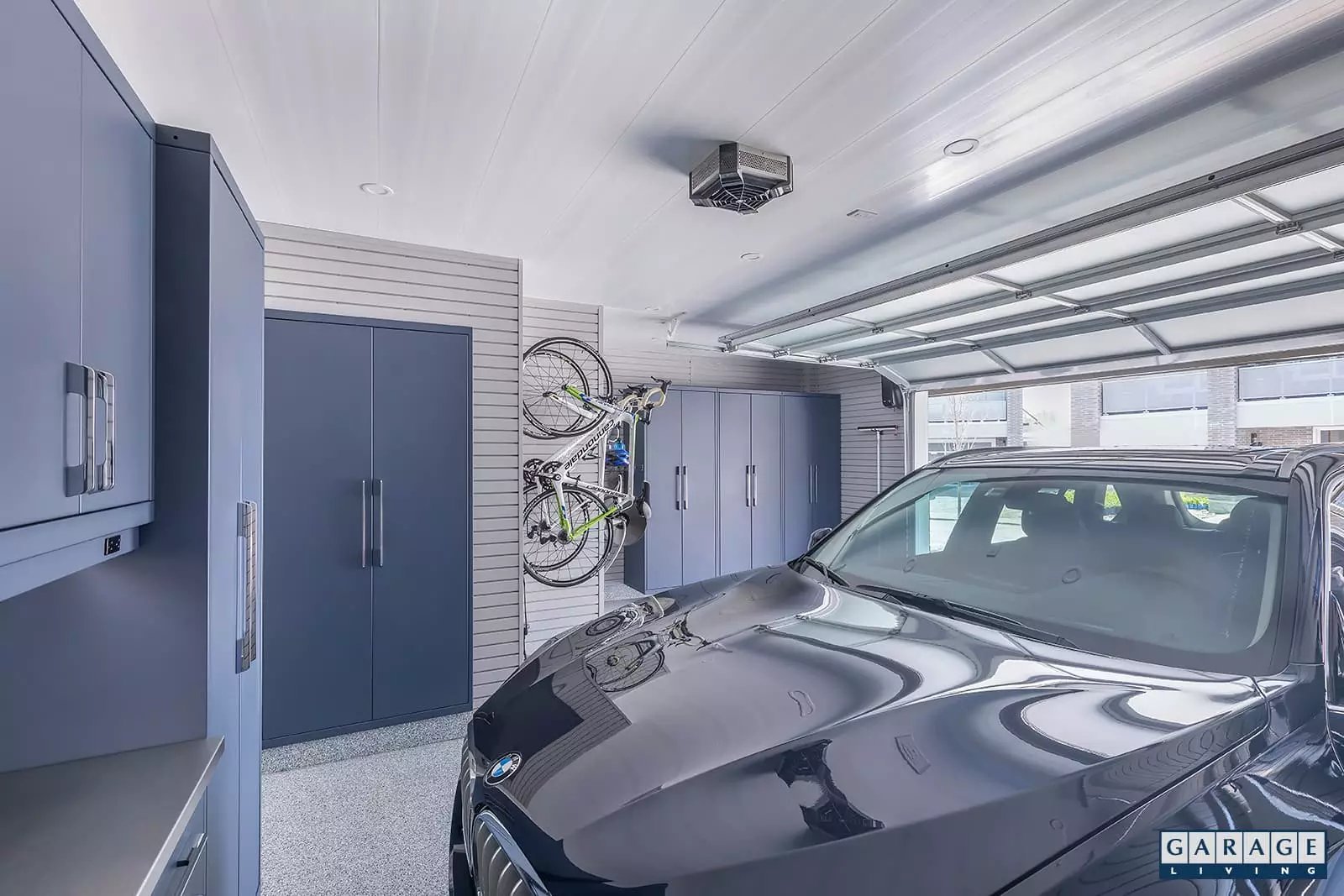
The best garage storage options: systems that hold up
At the top of the rankings are integrated, wall-mounted garage storage systems designed specifically for long-term residential use.
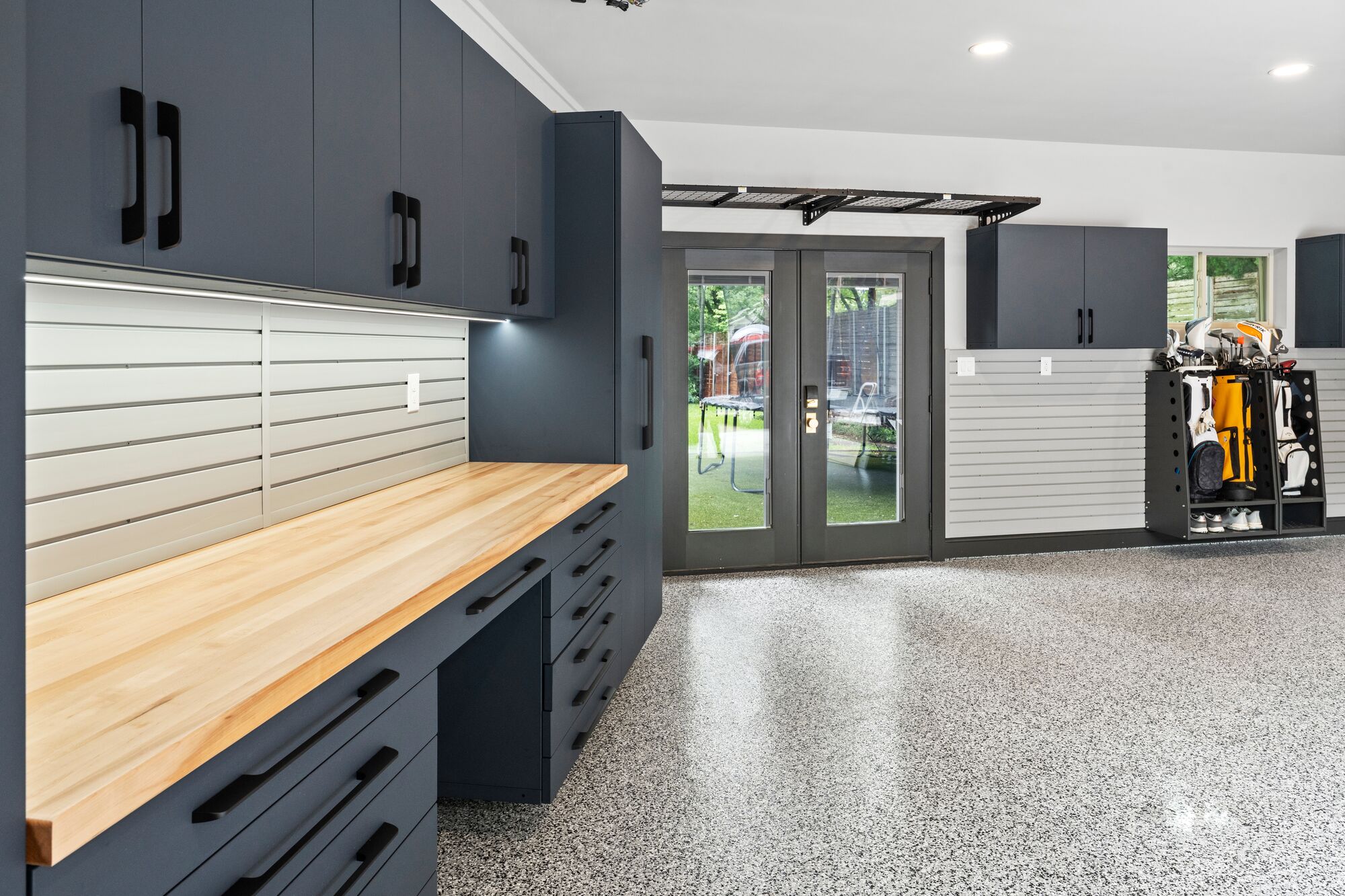
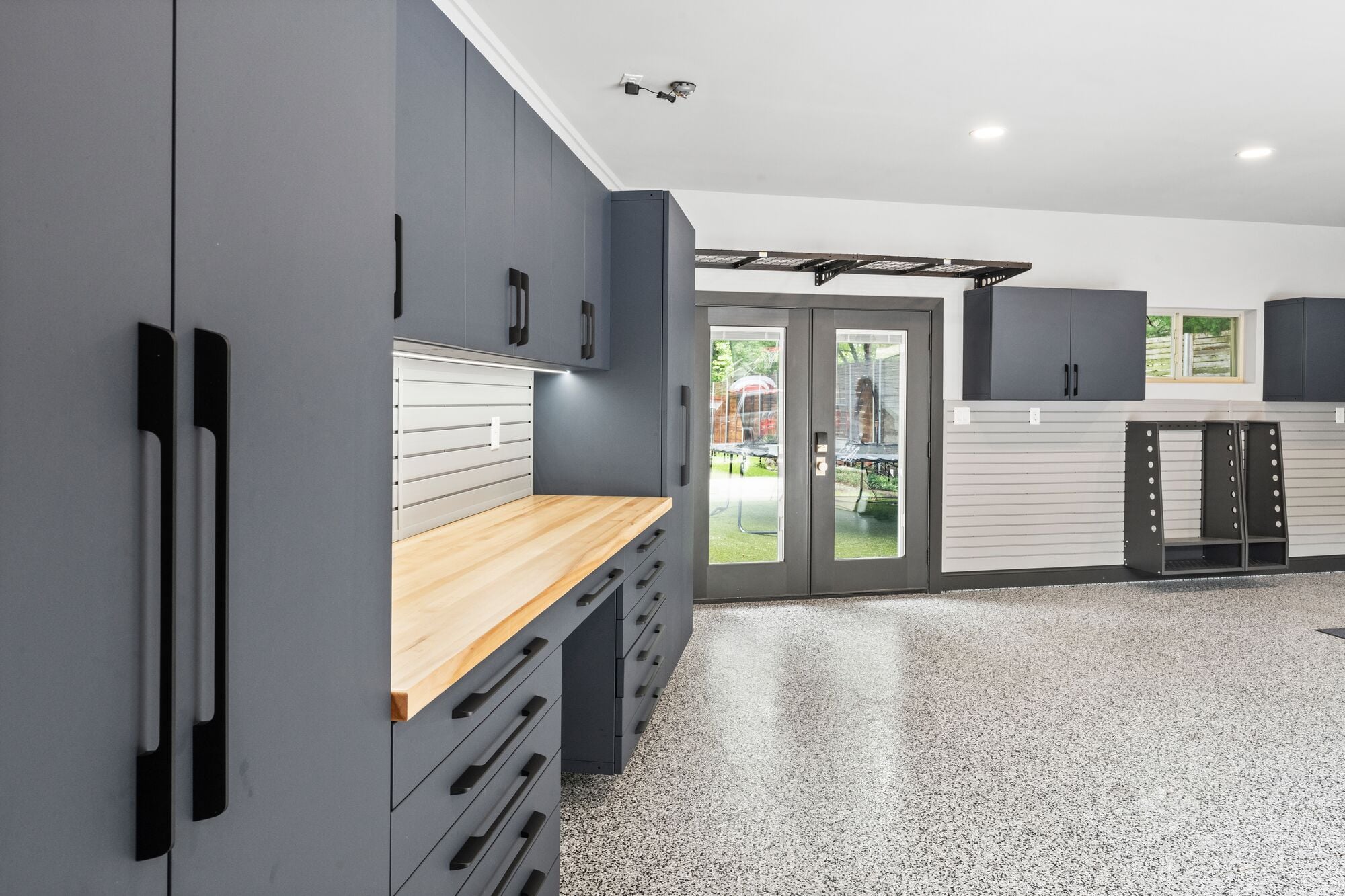
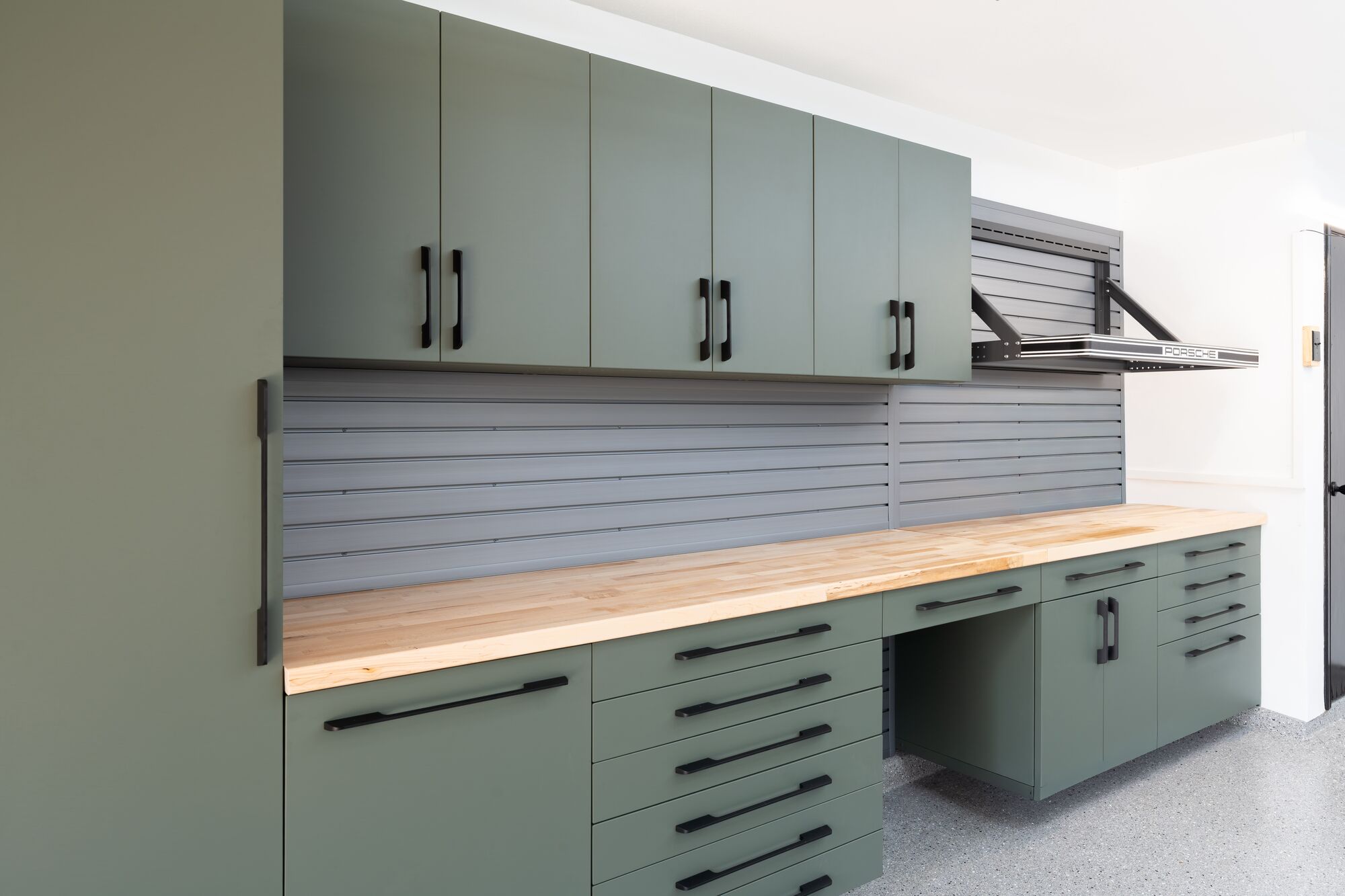
Wall-Mounted Cabinet Systems
Cabinet systems keep the floor clear, distribute weight properly, and create defined storage zones. High-quality materials resist moisture and temperature changes, while adjustable interiors allow storage to evolve over time.
Slatwall systems
Slatwall systems provide structured flexibility. Instead of random hooks, slatwall accessories lock into a continuous framework that distributes weight evenly across the wall. This allows storage to be adjusted without compromising wall integrity.
From a professional standpoint, slatwall systems are one of the most effective ways to store frequently used items while keeping them visible and accessible.
Ceiling-mounted storage for long-term items
Used correctly, overhead storage is ideal for seasonal or rarely accessed items. The key is proper load rating, spacing, and professional installation. When integrated into a complete garage storage setup, ceiling storage frees up valuable wall and floor space.
How Garage Living designs garage storage differently
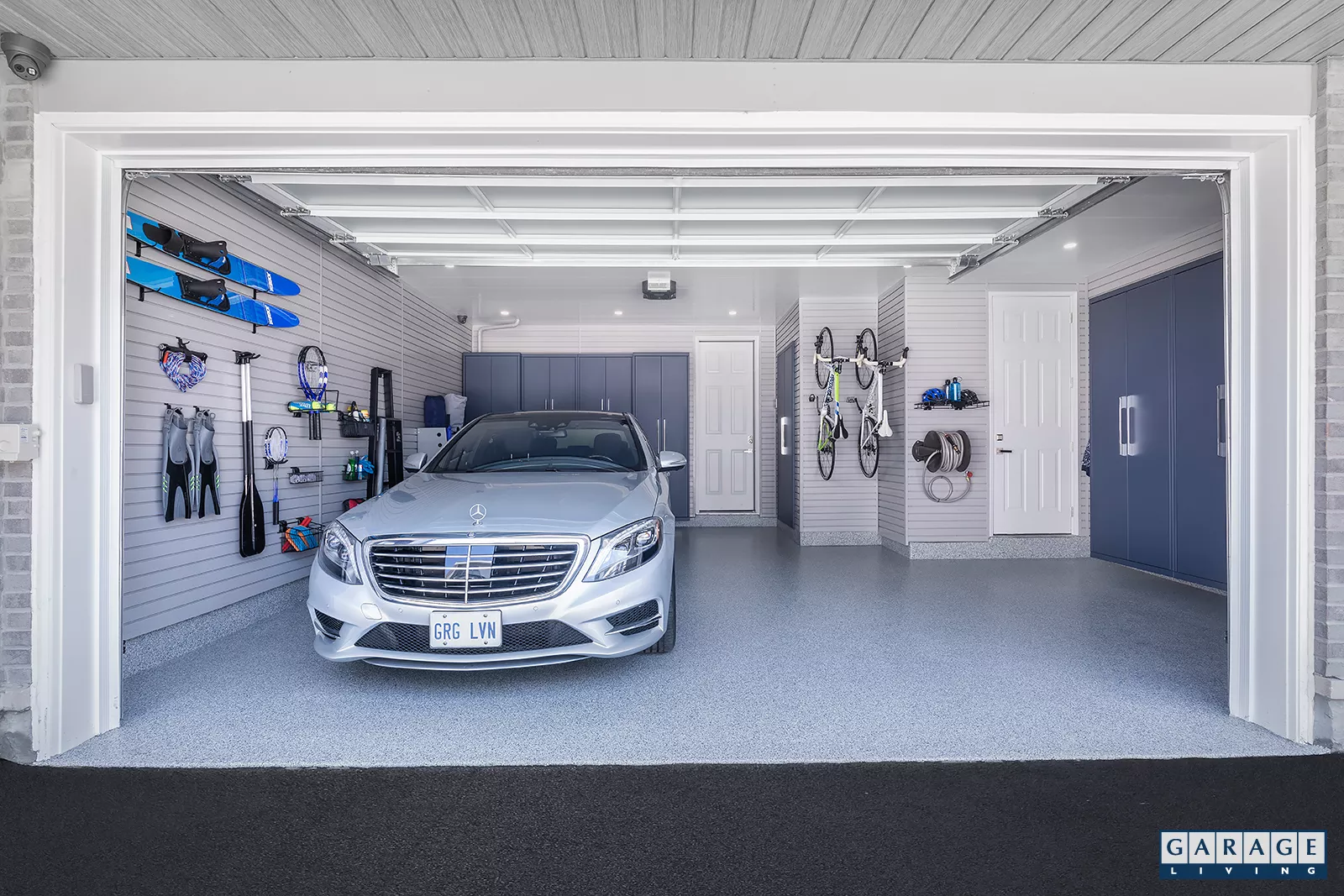
At Garage Living, garage storage is designed as part of a complete garage system.
Every project begins by understanding how the garage is actually used. Vehicle size, door swing, walking paths, and daily access needs come first. Storage is then designed around those realities.
Garage Living’s approach combines:
- Wall-mounted cabinetry engineered for garage conditions;
- Slatwall systems that allow storage to adapt over time;
- Clear zoning for parking, storage, and work areas.
This system-based design ensures that garage storage remains functional, organized, and visually cohesive long after installation.
How to choose the right garage storage for your home
Before selecting any garage storage system, consider the following:
- What items need daily access versus seasonal storage;
- How much space vehicles require for comfortable parking;
- Wall structure and load capacity;
- How storage needs may change in the next five to ten years
- Whether professional installation is required for safety and longevity
Choosing garage storage without considering these factors often leads to frustration and costly revisions.
Common garage storage mistakes professionals see
One of the most frequent issues is overloading walls or shelves beyond their design limits. Another is blocking vehicle access with poorly placed storage.
Storing everything at floor level is also a common mistake. It limits usability and accelerates clutter. Finally, choosing based on price or appearance alone often results in systems that cannot adapt as needs change.
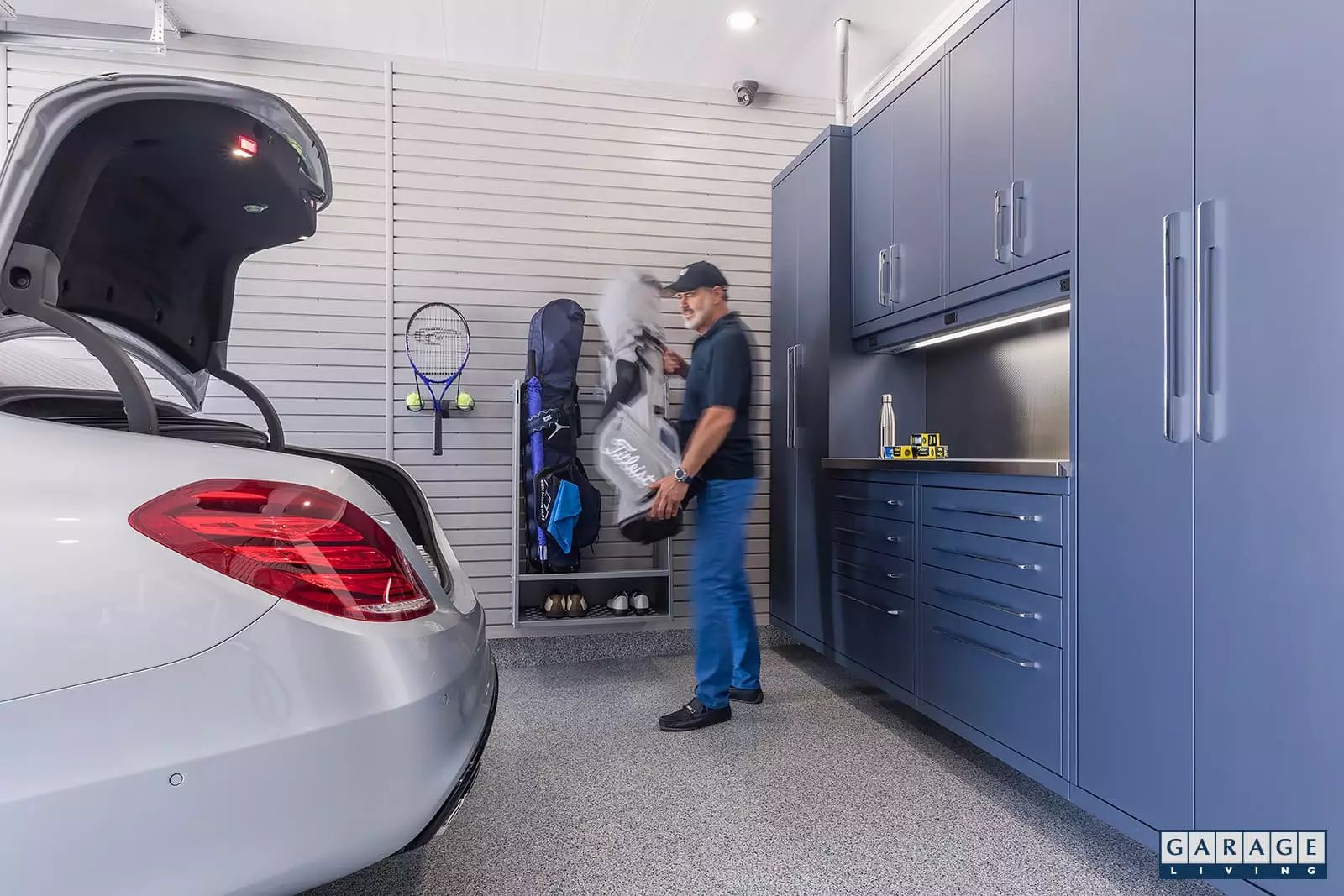
Garage storage that stays organized
The best-performing garage storage solutions prioritize structure, adjustability, and durability. They respect the garage as a functional space, not just a storage room.
For homeowners serious about reclaiming their garage, professional planning and system-based design make the difference between short-term improvement and long-term usability.
Explore some of Garage Living projects to see how integrated garage storage systems perform in real homes, or speak with a Garage Living specialist to design a solution that fits your needs.