.jpg)
Successful homeowners rarely start improving their homes where most people expect. They do not begin with kitchens, bathrooms, or furniture. They start in the garage.
They do this because the garage controls vehicle access, storage overflow, etc. When garage storage is planned correctly, clutter stops spreading into the rest of the house. When it's ignored, even the best interior organization breaks down.
After working in hundreds of residential garages across North America, one pattern is consistent: homes that perform well long term almost always begin with a professionally-designed garage.
Why the garage comes first?
The garage is the largest, most flexible space in most homes. But it's also the most misunderstood.
It serves multiple roles at once: it stores vehicles, seasonal items, tools, sports equipment, and daily grab-and-go items. It is also one of the main entry points into the home. When garage storage fails, the impact is immediate and visible everywhere else.
Poor garage planning leads to predictable outcomes: vehicles end up squeezed, items move to basements and closets, and storage decisions inside the home become reactive rather than intentional.
When the garage is designed first, the opposite happens: storage has a clear home, vehicles fit, and the rest of the house stays quieter, calmer, and easier to maintain.
What patterns Garage Living consultants observe?
Across garage projects, our design consultants have noticed certain patterns repeat:
In homes where the garage was never properly planned, storage tends to stack outward. Floor-based storage grows first. Shelving fills next. Eventually, parking is compromised. And once vehicles no longer fit, the garage stops functioning as intended.
At that point, storage migrates. Items move into hallways, spare rooms, and basements. Homeowners often respond by organizing those spaces, but the root problem remains unresolved.
The homeowner has invested time and money organizing the house, yet the clutter keeps returning. But when the garage is reviewed, the issue becomes obvious: the space was never designed to handle the volume, weight, and access needs placed on it.
Homes where the garage was addressed early tell a different story.
The garage shapes how your home works
The garage influences daily life more than most homeowners realize.
Garage layout affects how people enter and exit the home. When storage blocks walking paths, doors, or vehicle clearance, daily routines become inefficient. Items end up placed wherever there is available space. Over time, this becomes clutter.
Floor-based storage has a compounding effect. Once items are placed on the floor, cleaning becomes difficult, vehicles inch closer to walls, and doors swing into stored items.
Wall planning is equally important. When walls are not designed to carry proper loads, homeowners compensate by stacking downward. This creates safety risks and reduces usable space.
What successful homeowners do differently?
Homeowners who maintain long-term order follow a few principles in the garage.
- They plan parking before storage
Vehicles are the largest and least flexible elements in the garage. Successful homeowners ensure parking clearance is defined before adding any storage. This protects doors, mirrors, and walking paths. - They separate daily-use items from long-term storage
Items used every day are kept within arm’s reach. Seasonal and infrequently used items are stored higher or deeper. This prevents constant reshuffling. - They rely on wall-mounted systems instead of floors
Floor clearance is preserved. Cleaning is easier. The garage stays usable year-round. - They design for change, not just current needs
Households evolve. Children grow. Hobbies shift. Downsizing happens. Adjustable garage storage accommodates these changes without starting over.
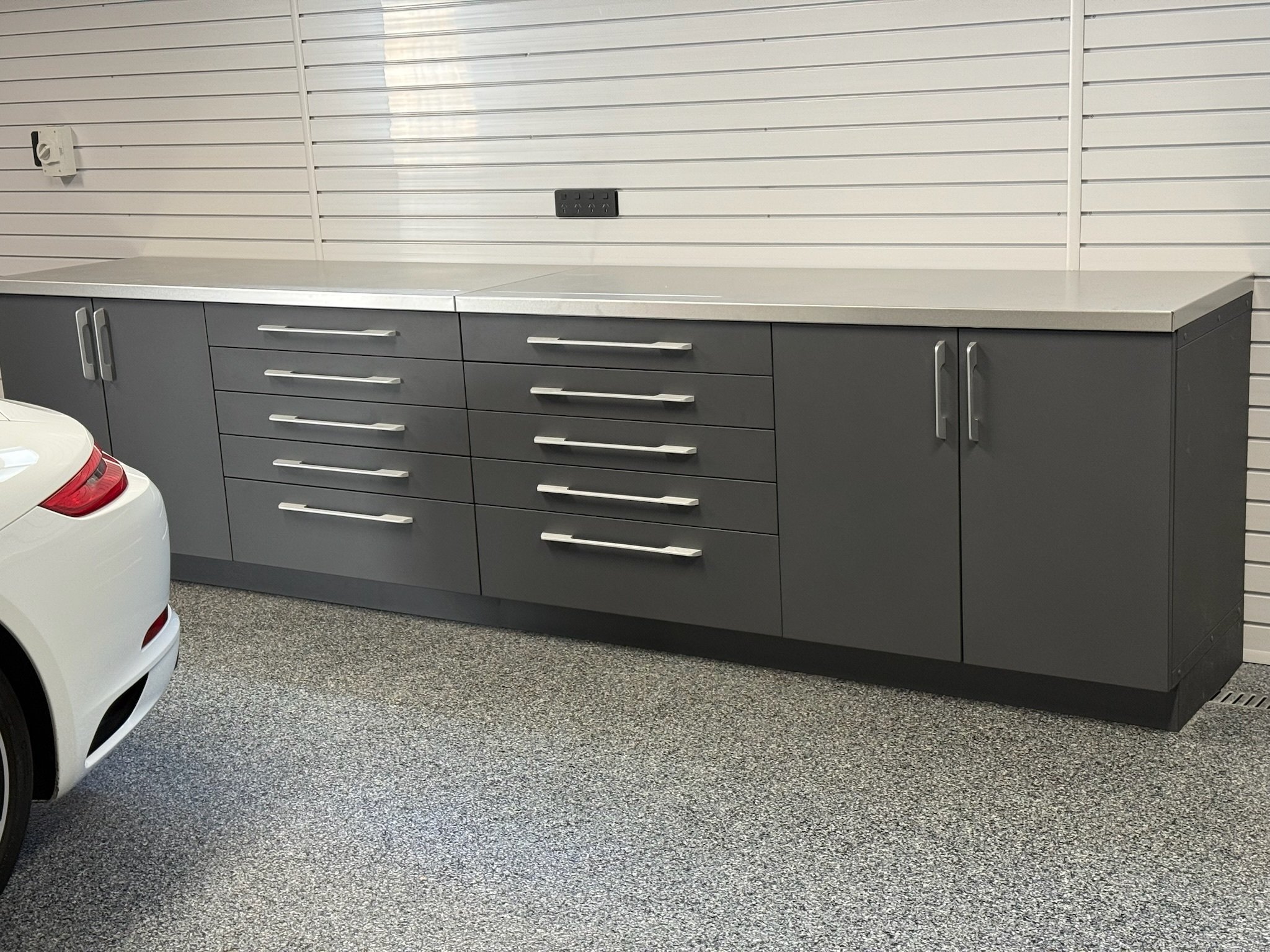
Garage storage systems that support long-term success
Not all garage storage performs equally over time. Some solutions look effective at first but break down under everyday use.
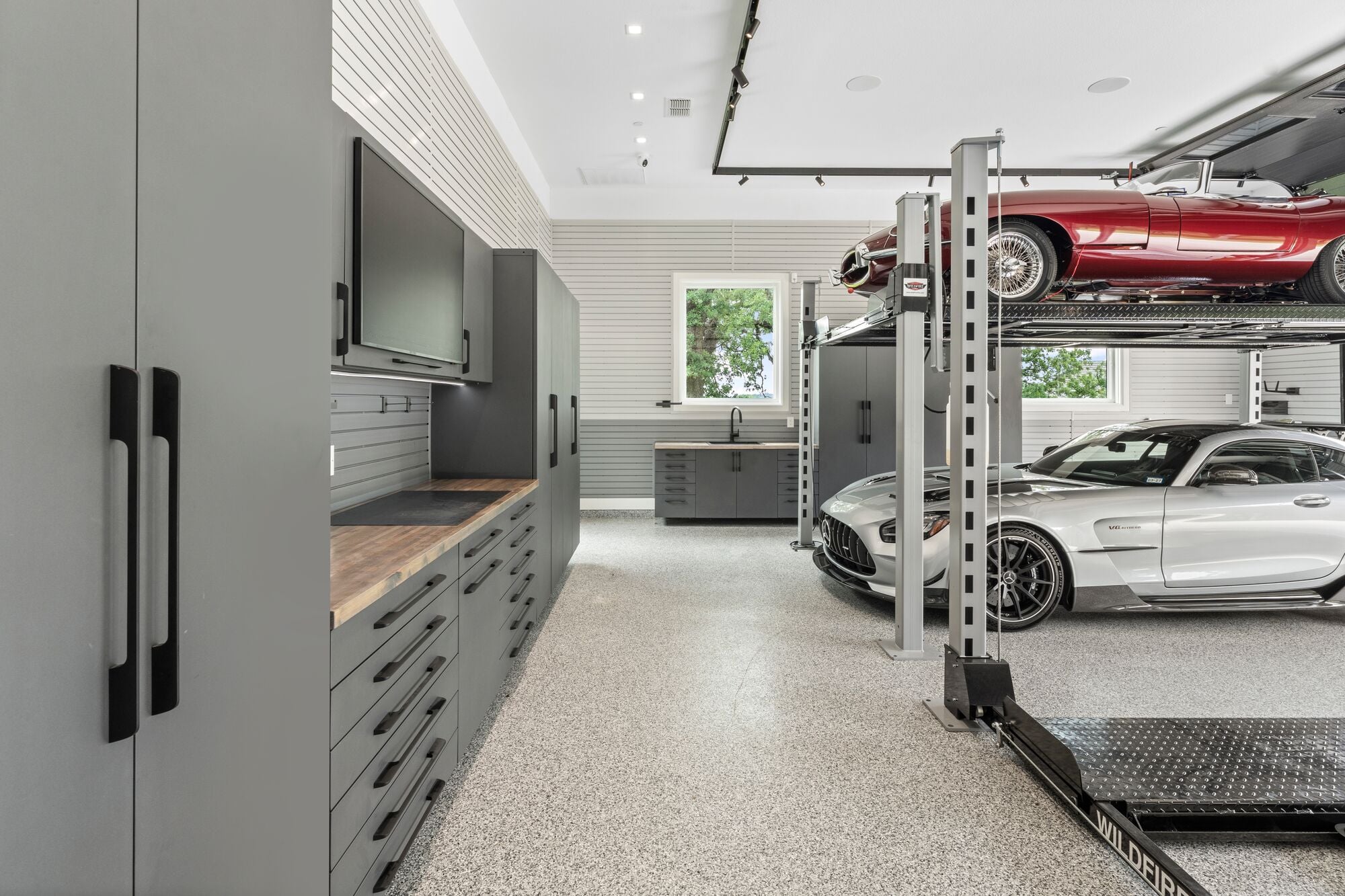
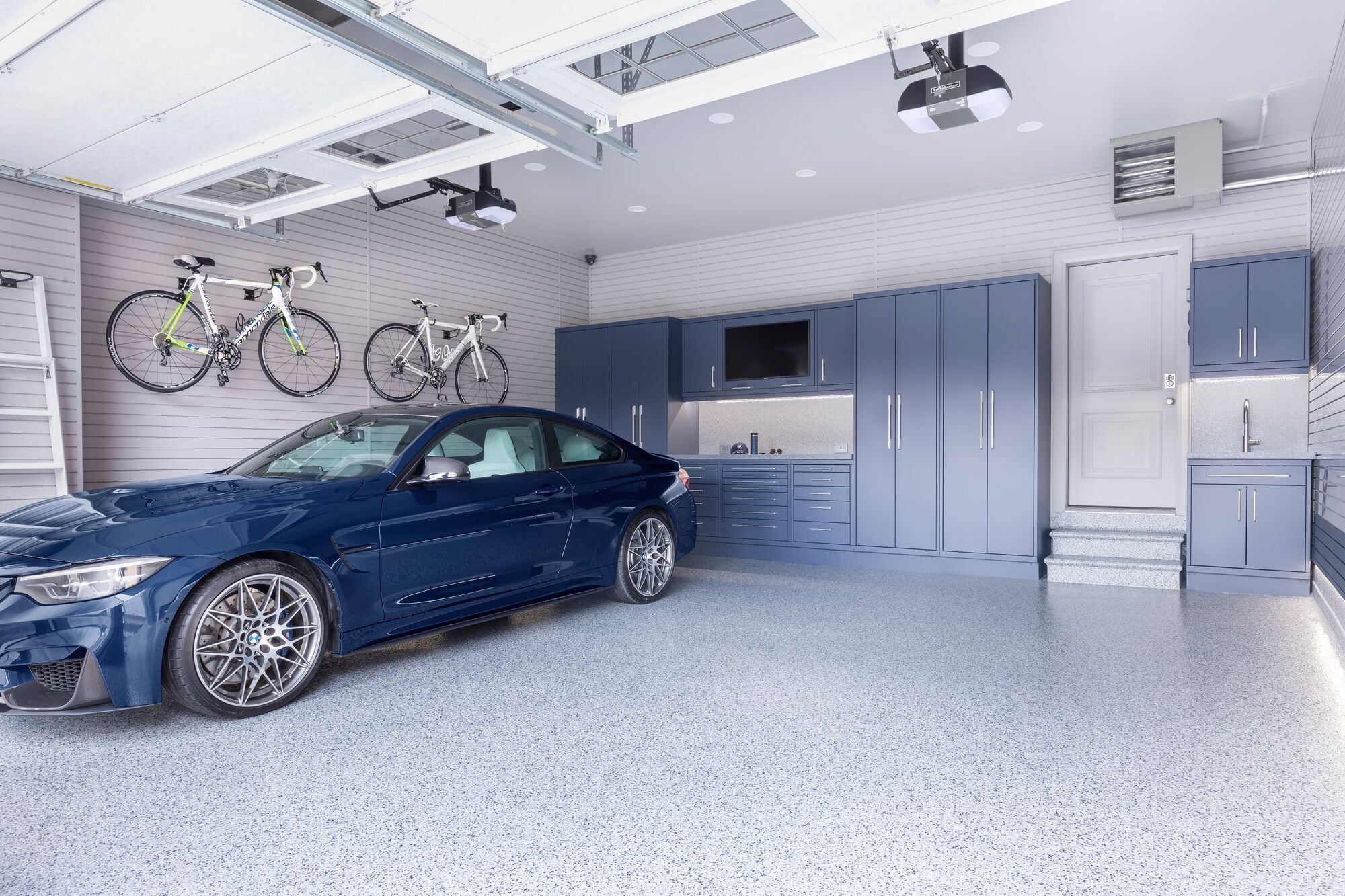
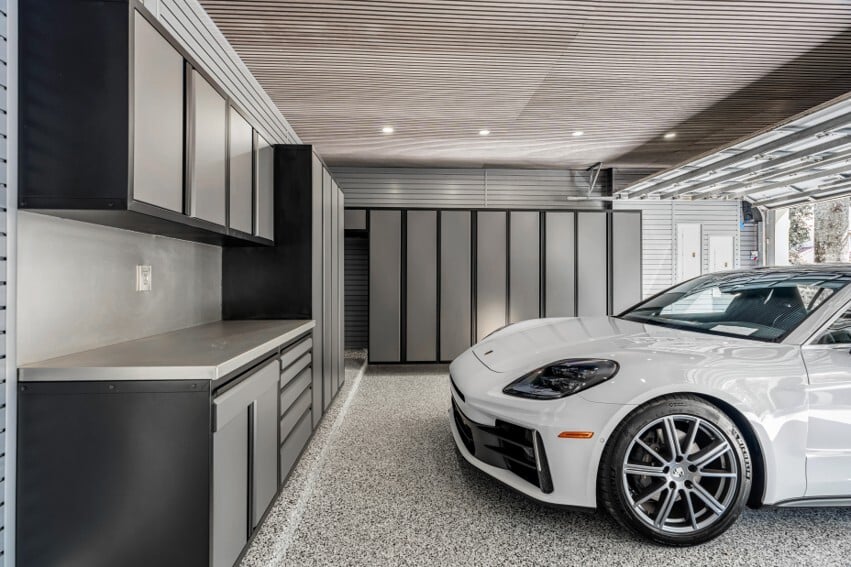
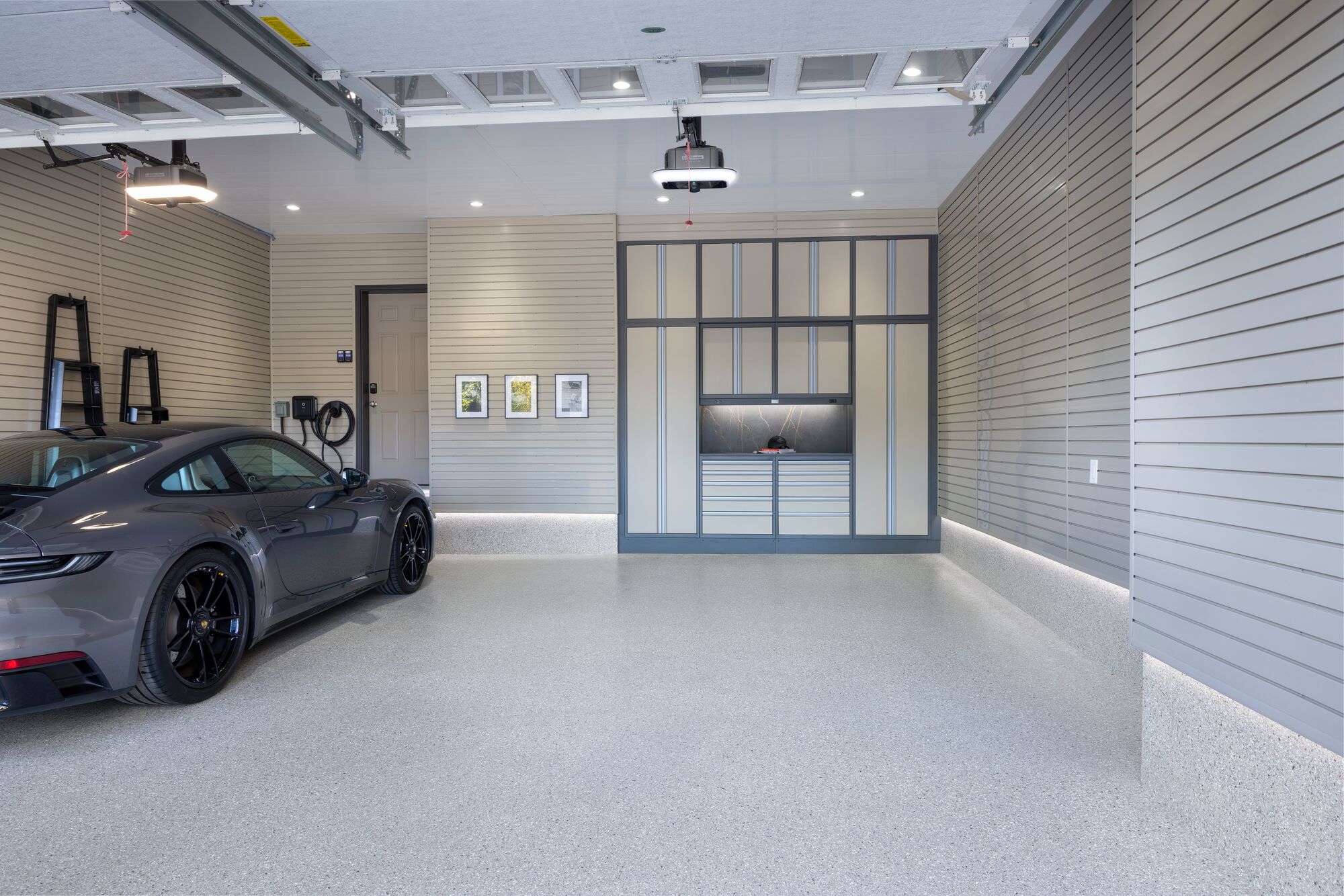
Wall-mounted cabinet systems perform well because they distribute load properly, preserve floor space, and create defined zones. Cabinets protect contents from dust and moisture while maintaining visual order.
Read: Garage Storage Cabinets: The Key to Better Garage Organization
Integrated slatwall systems allow flexible storage without drilling new holes as needs change. Hooks, shelves, and accessories can be repositioned without compromising wall structure. This adaptability is critical for long-term success.
Why professional garage planning matters?
Professional garage planning focuses on function before appearance.
This means evaluating vehicle sizes, door swing clearance, wall structure, ceiling height, and household routines. Storage is designed around these realities rather than around available products.
Garage Living approaches garage storage as part of a complete system. Parking zones are defined first. Storage is layered around daily access, long-term needs, and future change. Slatwall systems and custom cabinetry are integrated to support flexibility and durability.
This planning-first approach prevents common mistakes and ensures the garage continues working as the household evolves.
Read: The 3 Steps in Garage Living’s Garage Makeover Process
Starting in the garage is a strategic decision
The garage determines how the rest of the home works. Undeniably, storage decisions made here have the longest-lasting impact on daily life.
Successful homeowners start in the garage because it prevents repeat clutter cycles and supports long-term organization. Professional planning ensures the space works not just today, but for years to come.
When the garage works, the home works better.