.jpg)

Ask someone what they want in a new garage and the first answers are usually: cabinets, flooring, storage, room for the cars.
Spend a little more time talking to them and the interesting details start to surface:
Where do the hockey bags go when they come home wet?
Where do you put the gardening tools?
Where does the car cover live?
These details can seem small, but they also determine whether a garage works well for the people who use it every day.
Good garage design starts with how you live
A garage has a long list of jobs. It parks cars, stores seasonal items, holds sports equipment, supports hobbies, houses tools and often becomes the place where you handle the messier parts of everyday life.
That means garage storage needs to account for how you use the things you own.
A similar approach appears in Houzz's garage organization guidance: start by considering what you need to store and how you plan to use the space, then choose the storage system around those needs.
That way of thinking leads to better questions:
What do you reach for every day?
What only comes out once or twice a year?
What do you want close to the door?
Those answers start to shape the garage.
The hockey equipment problem
Take a family with kids who play hockey.
The equipment comes home regularly. Bags, sticks, skates and protective gear all need somewhere to go. Some items need to dry. Others need to be easy to grab on the way to the rink.
Putting everything into a cabinet might look tidy. It may also make the next trip to the rink harder.
An open, accessible area for frequently used sports equipment can make more sense. A dedicated sports zone keeps the gear together, gives each item a place and makes it easier to put things away when everyone gets home.
The same thinking applies to soccer, baseball, golf, cycling and other activities. Sports equipment is often used in groups, so storing it according to the activity can make more sense than treating every item as an individual storage problem.
The car care collection
Then there is the homeowner who takes care of the car.
There may be detailing products, microfiber towels, brushes, tire supplies, a car cover, a trickle charger and all the other pieces that come with keeping a vehicle in great shape.
None of those items is particularly difficult to store.
The interesting question is where they should live relative to the car and the way the homeowner uses them.
A detailing area might need a work surface. Frequently used supplies should be within easy reach. A car cover needs a place where it can be put away without becoming another item thrown onto a shelf. A charger needs to be accessible when the vehicle is parked.
The difference is subtle, but it changes the experience of using the garage.
The same principle applies to a homeowner who loves gardening. The tools used every weekend should not have to compete for space with the holiday decorations that come out once a year.
Think in zones, not just storage
A useful garage often has several distinct zones.
| Garage zone | What belongs there | What matters most |
|---|---|---|
| Car care | Detailing supplies, towels, chargers, covers | Easy access near the vehicle |
| Sports | Hockey, golf, bikes, balls, seasonal equipment | Grab-and-go access |
| Gardening | Tools, gloves, soil, supplies | Convenient location near the garage entry |
| Seasonal | Holiday decorations, seasonal gear | Higher or less frequently accessed storage |
| Everyday | Items used when leaving or returning home | Close to the door |
The categories will change from one household to another. That is the point.
There is no universal list of what a garage needs to store because there is no universal way people use their garages.
Sometimes the smallest detail matters most
One homeowner may need a shelf near the entry for something they grab every morning. Another may need a dedicated place for muddy footwear. Someone else may need a spot for a cooler, beach chairs or camping gear.
A homeowner who stores Christmas decorations for several months of the year may care less about having those boxes at eye level than being able to retrieve them without moving everything around them.
That last detail matters more than it sounds.
Consider two rows of storage bins. In one arrangement, you have to remove several bins to reach the one at the back. In another, every bin can be accessed individually.
Both arrangements technically provide storage.
Only one respects the way the homeowner needs to use it.
The same thinking applies to overhead storage. Items that are rarely needed can go higher, while frequently used equipment should stay within comfortable reach.
The garage should work around the car
Storage is only part of the equation. The garage still needs to function as a garage.
Cars need room to park. Doors need to open. People need to walk around the vehicle. Bikes, sports bags and gardening tools should not create an obstacle course between the car and the house.
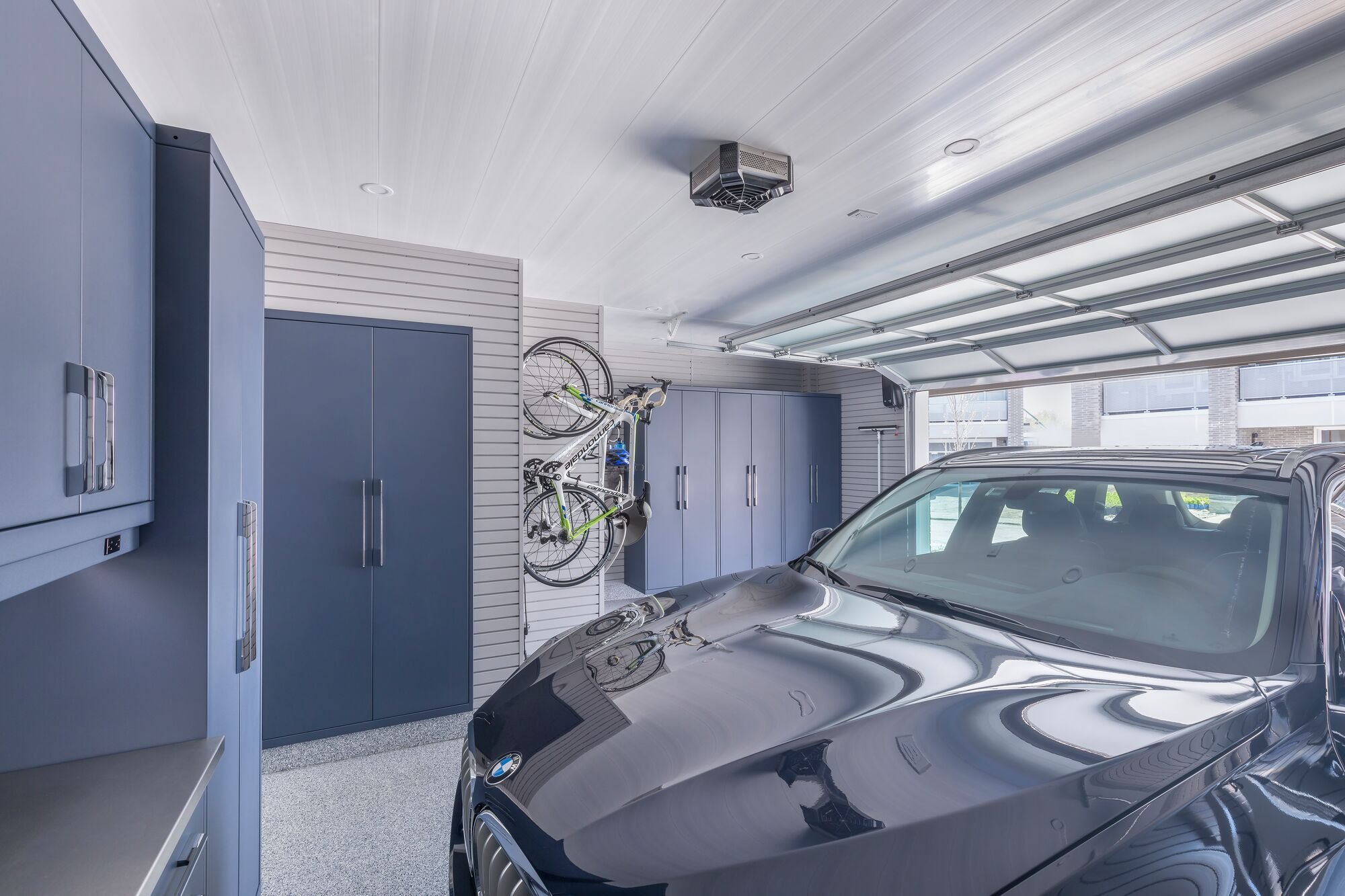
Walls, vertical storage and carefully planned cabinets can help keep belongings out of the parking area and off the floor.
The best storage plan leaves the garage feeling usable rather than simply full.
Five questions worth asking before designing a garage
Before choosing cabinets, shelving or accessories, look at the routines that already happen in the space.
1. What comes into the garage every day?
Those items should be easy to reach and easy to put away.
2. What gets dirty, wet or muddy?
Give those items a place that can handle how they are used.
3. What gets used together?
Keep related equipment together instead of scattering it throughout the garage.
4. What only comes out seasonally?
Those belongings can occupy less accessible storage, leaving prime locations for everyday items.
5. What small task currently creates the most friction?
That may be the detail worth designing around.
That last question can reveal more than a long list of storage requirements.
Storage should follow the person
There is a temptation to start a garage project by deciding how many cabinets, shelves and hooks will fit on the walls.
A better starting point is the person standing in the garage.
What do they do there? What do they keep there?
What frustrates them? What would make a Saturday morning easier?
What would make coming home after soccer less messy?
What would make taking care of the car more enjoyable?
Those answers can lead to design decisions that would never appear on a standard garage storage checklist.
That is where the small details become important.
A garage can have plenty of storage and still be frustrating to use. It can also have a carefully considered place for every important part of someone's routine and feel remarkably easy to live with.
The difference is in the thinking behind the design.
Garage design & storage FAQ
What should a well-designed garage include?
A well-designed garage should reflect how the household uses the space. Depending on the homeowner, that may include dedicated areas for cars, sports equipment, car care, gardening, tools, seasonal storage and everyday items. Frequently used belongings should be easy to reach, while less frequently used items can occupy higher or less accessible storage.
How should I organize sports equipment in my garage?
Group sports equipment according to the activity and how often it is used. Hockey bags, sticks and skates, for example, may benefit from an open, accessible area where they can dry between uses. Bikes, golf equipment and seasonal gear can have their own dedicated zones.
How can I store seasonal items in the garage?
Store seasonal decorations in higher or less frequently accessed areas while keeping everyday belongings in easier-to-reach locations. The storage should still allow you to retrieve individual bins without having to move several others first.
How do I keep garage storage from taking up parking space?
Plan storage around the vehicles and the paths people use to enter, exit and move through the garage. Wall-mounted, vertical and overhead storage can help keep belongings off the floor and preserve usable parking space.
What is the best way to plan garage storage?
Start with what you store and how you use it. Identify frequently used items, seasonal belongings, activities and areas where clutter tends to accumulate. Then create garage zones around those routines before deciding which cabinets, shelves or accessories belong in each area.