.jpg)
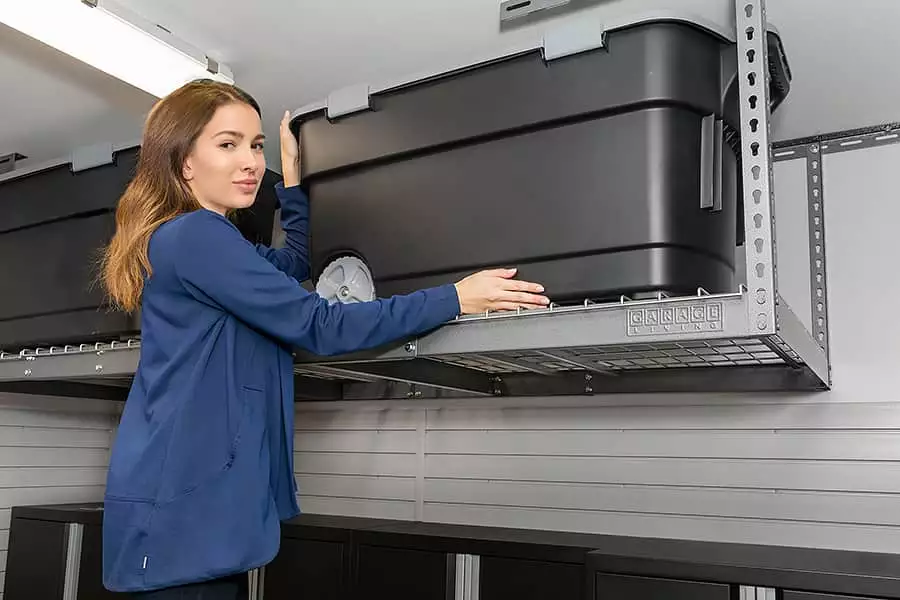
Overhead garage storage often gets framed as an easy win. Use the ceiling, clear the floor, problem solved.
In reality, it is one of the most misjudged storage solutions in the garage.
Some items belong overhead. Others introduce risk or frustration. And when a system isn’t installed with precision, it can quickly become a concern sitting above your vehicle.
This is where professional installation makes a meaningful difference.
At Garage Living, overhead storage is never treated as a standalone add-on. Our installers approach it as part of a larger, integrated system, ensuring it works safely, efficiently, and in alignment with how the garage is actually used.
This guide breaks down not just how overhead storage should be used, but how it’s properly planned and installed so it performs the way it’s intended.
What homeowners need to know first
Overhead storage is best suited for bulky, infrequently used items. But beyond that, performance depends heavily on how it’s installed.
Our professional installers focus on details most homeowners don’t see:
- Securing racks directly into ceiling joists, not drywall or weak anchor points.
- Evaluating joist spacing, condition, and load capacity before installation.
- Distributing weight evenly across the structure, not just within the rack.
- Positioning systems to maintain safe clearance for vehicles and movement.
- Aligning placement with the rest of the garage layout, not just “available space”.
Most ceiling racks are rated for 400–600 lbs, but that rating assumes proper installation. Without that level of care, the margin for error increases.
Garages also need adequate ceiling height, typically at least 8 feet, to make overhead storage viable without interfering with daily use.
When overhead racks make sense (and when they don’t)
Overhead storage works best when everything below it is already functioning well.
In garages where slatwall systems are fully utilized and cabinetry is doing its job, ceiling storage becomes a strategic extension rather than a quick fix.
This is often how our installers approach it during a project. They don’t start at the ceiling. They build upward once the foundation is right.
Ideal items for overhead storage include:
- Seasonal décor
- Camping equipment
- Luggage
- Pool accessories.
These items take up space but don’t need to be accessed regularly.
Read ⟩ 7 Garage Overhead Storage Ideas to Maximize Space and Eliminate Clutter
When overhead storage doesn’t make sense:
There are clear situations where our installers will either advise against it or recommend an alternative:
Low ceilings
Anything under 8 feet limits usability and can create clearance issues, especially with larger vehicles.
Older or compromised framing
If joists show signs of wear, water damage, or irregular spacing, a proper structural assessment comes first.
Frequently used items
If you’re reaching for something often, placing it overhead creates unnecessary friction.
Vehicle clearance conflicts
SUVs, trucks, or lifted vehicles require careful measurement and planning before anything is installed above them.
These are the kinds of details that often get overlooked when overhead storage is treated as a simple add-on. In practice, getting it right comes down to how well the space is evaluated before anything is mounted.
What our installers look for during an in-home assessment
Before any overhead system is installed, our team takes a step back to understand how the garage functions as a whole. The goal is not just to add storage, but to ensure every element works together safely and efficiently.
During an in-home assessment, our installers evaluate:
- Ceiling structure and joist integrity
Confirming where and how the system can be securely anchored, based on framing condition and spacing. - Vehicle dimensions and clearance needs
Measuring height, door swing, and daily movement to avoid conflicts once the system is in place. - Current storage setup
Identifying what is already working at ground and wall level, and what should be relocated before using ceiling space. - Access and usability
Ensuring stored items can be reached when needed without creating inconvenience or safety concerns. - Weight distribution and load planning
Recommending how items should be organized within the system to maintain balance and long-term reliability. - Future flexibility
Considering how your needs may change over time so the setup continues to perform without requiring rework.
This process helps eliminate guesswork and ensures overhead storage is not just added, but properly integrated into a garage that works the way it should.
Safety tips for long-term use
A properly installed rack is only the starting point. Long-term safety comes from how you use it.
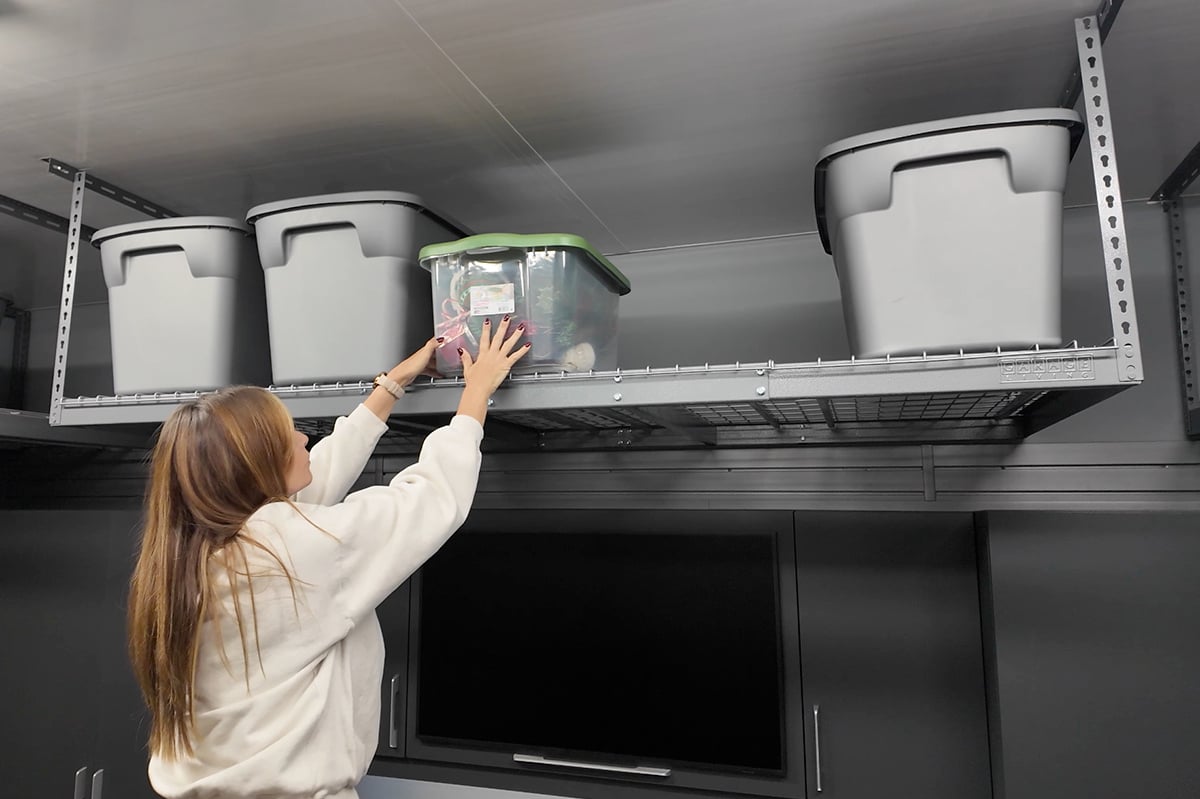
- Use sealed, stackable bins to prevent dust and debris.
- Label everything clearly so you’re not pulling bins down unnecessarily.
- Track approximate weight to avoid slowly exceeding capacity.
- Use a proper step ladder, not makeshift solutions.
- Keep the area below clear, especially if heavily loaded.
What belongs overhead vs. at eye level
This is where most garages either work beautifully or become frustrating.
Best items for overhead storage:
- Seasonal décor and holiday bins
- Camping and travel gear
- Pool accessories and outdoor items
- Spare or seasonal tires (properly stored)
- Bulky items used once or twice a year.
Items that should stay accessible:
- Automotive fluids and chemicals (properly stored)
- Power tools and hand tools
- Frequently used sports equipment
- Anything accessed more than once or twice a month.
Simple rule: If you need it often, it should never require a ladder.
What this looks like in practice
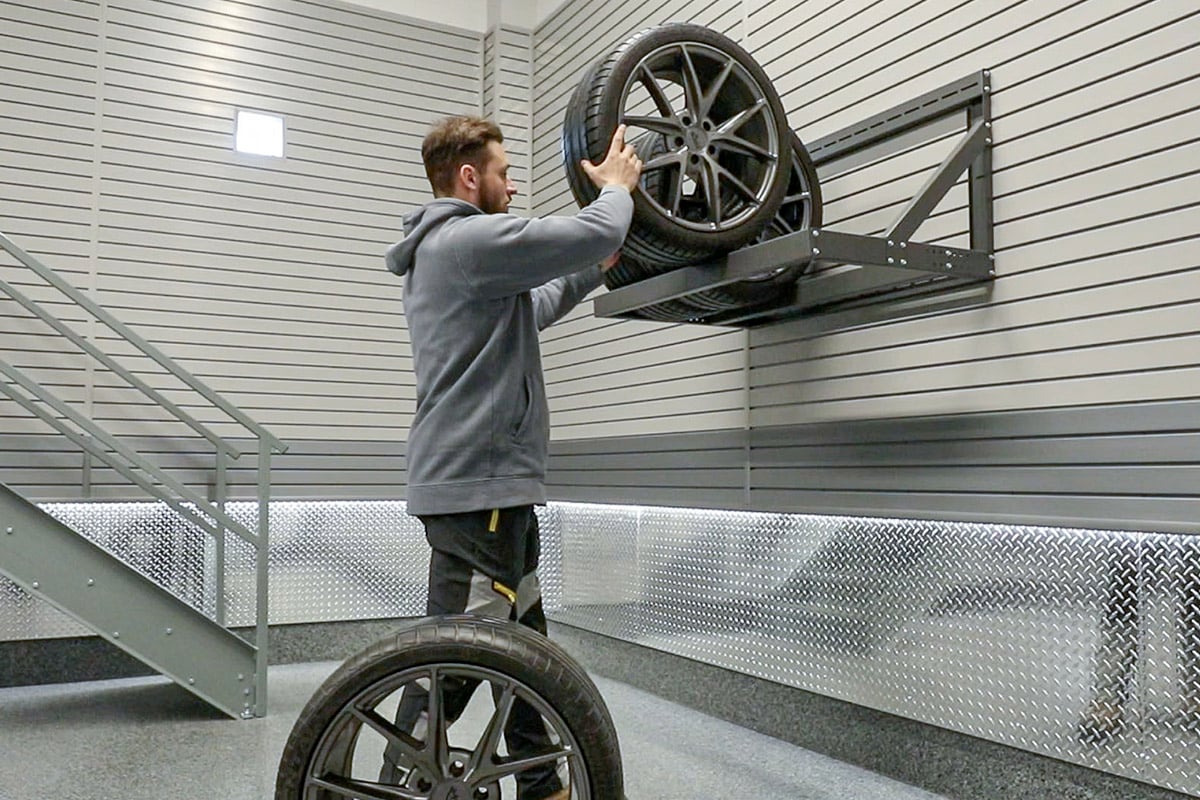
Seasonal tire storage
A full set of tires typically weighs between 80–120 lbs. Stored evenly in protective bags, they fit comfortably within most rack limits when correctly installed.
Holiday storage for larger homes
It’s not uncommon to see 10–15 bins dedicated to seasonal décor. Overhead storage keeps these contained without sacrificing prime storage zones.
Workshop garages
In garages used for projects, overhead racks often hold overflow materials like lumber or bulk supplies that don’t need daily access.
Making overhead storage part of a complete system
The most functional garages are designed in layers:
- Overhead racks for low-frequency, bulky items.
- Slatwall systems for flexible, everyday organization.
- Cabinetry for enclosed, clean storage.
The best garage storage setups combine overhead storage, wall systems, and cabinets in a way that reflects how the space is used.
Read ⟩ DIY vs. Professional Garage Renovation: How to Choose What's Right for You
Frequently asked questions
How much weight can overhead garage storage hold?
Most systems are rated between 400–600 lbs, but only when properly installed into ceiling joists with evenly distributed weight.
Is overhead garage storage safe?
Yes, when installed correctly into structural joists and used within its rated capacity. Poor installation or overloading is where issues arise.
Can I install overhead storage on any garage ceiling?
Not always. Ceiling height, joist condition, and construction type all determine whether installation is appropriate.
What is the minimum ceiling height for overhead storage?
At least 8 feet is recommended to maintain safe clearance, especially when parking vehicles.
What should not be stored in overhead garage racks?
Avoid storing heavy tools, chemicals, fragile items, or anything you need to access frequently.
Are overhead racks better than wall storage?
They serve different purposes. Overhead racks are for low-frequency storage, while wall systems handle everyday access.
Can I store tires on overhead racks?
Yes, as long as they are properly bagged, evenly distributed, and within the rack’s weight capacity.
Plan before you install
Overhead storage can be one of the most effective ways to free up space in your garage. But only when it’s planned with intention.
The goal is to build a garage storage system where every item has a defined place based on how often it’s used and how much it weighs.
If you’re thinking through how to structure your garage from ceiling to floor, it’s worth mapping it out before installing anything.
Talk to a Garage Living Consultant to design a system that works for how you use your space.